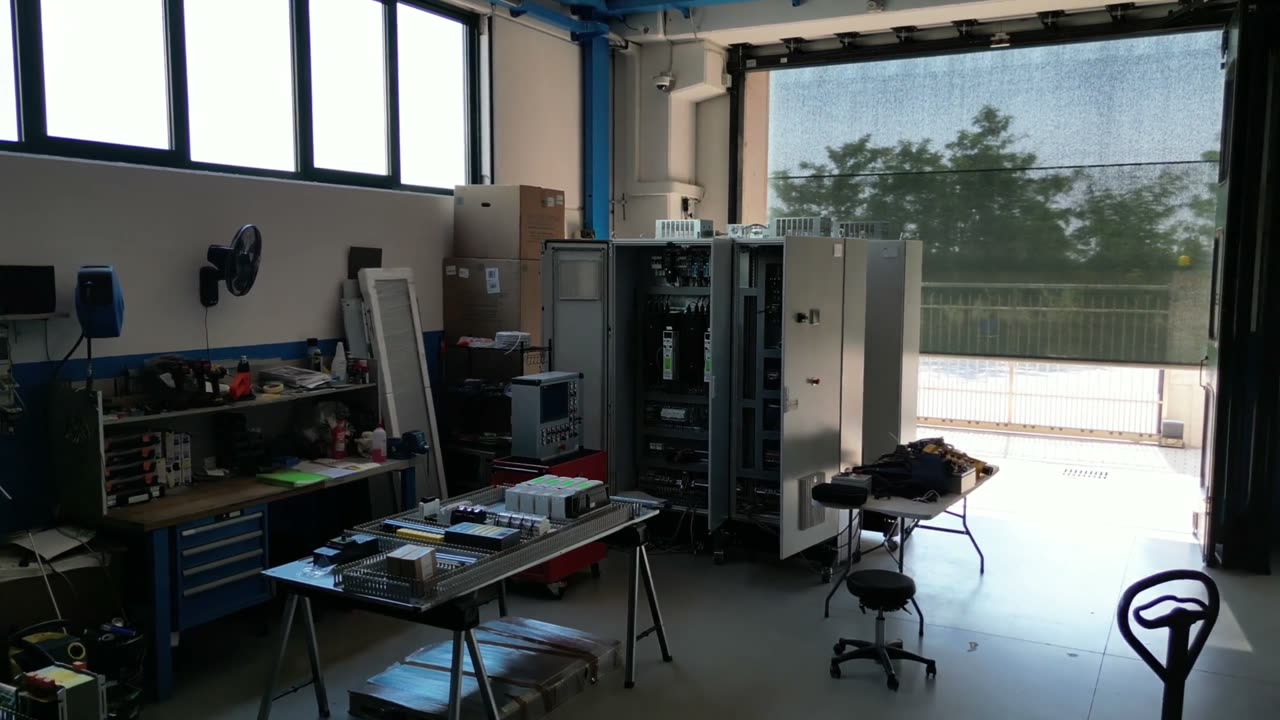
Electrical designer
Schematics, sizing, bills of materials, panel architecture. The panel exists on paper before it exists in the workshop.
What it takes electrical CAD (SPAC, EPLAN or equivalent), CEI/IEC standards, an orderly way of working.
Careers
Industrial automation in Mesero since 1996. Electrical schematics, software, control panel and commissioning all sit under one roof: what you build, you watch go into production.
CV in PDF · read by an engineer, not a job portal
Who we’re looking for
These aren’t job ads with a closing date: they’re the trades we work with. If yours is here, it’s worth sending your CV right now.
In the engineering office
Schematics, sizing, bills of materials, panel architecture. The panel exists on paper before it exists in the workshop.
What it takes electrical CAD (SPAC, EPLAN or equivalent), CEI/IEC standards, an orderly way of working.
Machine cycle, safety functions, alarms, and the screen the operator looks at for eight hours. When needed, the line SCADA.
What it takes Siemens (TIA Portal or Step 7) or an equivalent platform, and the ability to read a schematic.
A real project, mentored by an engineer: no photocopying, no filing. You spend time in the workshop too, not just at a computer.
What it takes a technical diploma in electrical engineering or electronics, an ITS (higher technical institute) program, or engineering studies.
In the workshop and in the field
Mounting plate, wiring ducts, wiring, marking, tests: you build the panel yourself, from the drawing to final testing. Based here, in the workshop.
What it takes reading schematics, manual dexterity, precision: a tidy cabinet shows at a glance.
From the panel to the machine: cable trays, cables, sensors, field connections. Often at the machine builders we work with, not at our site.
What it takes working from the schematic, manual dexterity, willingness to travel.
You go where the line is and get it running: field connections, tests, first batch. It’s the job where you learn fastest.
What it takes readiness to travel in Italy and abroad, familiarity with PLCs and field devices, a cool head when the line is down.
You answer the call when a line is down: remote diagnostics, software changes, on-site visits when needed.
What it takes experience with PLCs and industrial networks, a methodical approach to troubleshooting, patience on the phone.
Outside the workshop
Website, technical content, trade shows, sales material: explaining complicated things to the people who have to buy them.
What it takes good writing, and the drive to understand how a plant really works.
Accounting, invoicing, orders and paperwork: the part that keeps everyone else’s projects running.
What it takes organization, comfort with ERP software, discretion.
Can you wire both the panel and the machine? That’s the profile we’d most like to find: say so in your message. And if your trade isn’t listed, apply anyway: choose open application.
Application
No photos, and nothing about your health or opinions: we don’t need them and we don’t take them into account.
If your profile is a fit, we will write to you. We keep your application and CV for 12 months, then delete them.