
Readable wiring, consistent trunking and useful separations for checks and future work.
Control panel building
Industrial control panels for production and maintenance.
We build industrial panels with tidy wiring, accessible components, readable labelling, internal checks and documentation consistent with the schematic and BOM.
Tidy wiring
Accessible components
Internal testing
Final documentation
Where the panel has to make the difference
The value shows when someone has to open it and work on it.
A well-built panel isn't just tidy in a photo: it has to make assembly, checking, start-up, diagnosis and component replacement faster.
Field connections, tags and references must help wiring, SAT and maintenance.
The internal layout must make checks, replacements and status reading easier.
Schematic, BOM, labelling and the physical panel must stay aligned right up to delivery.
Inside the panel
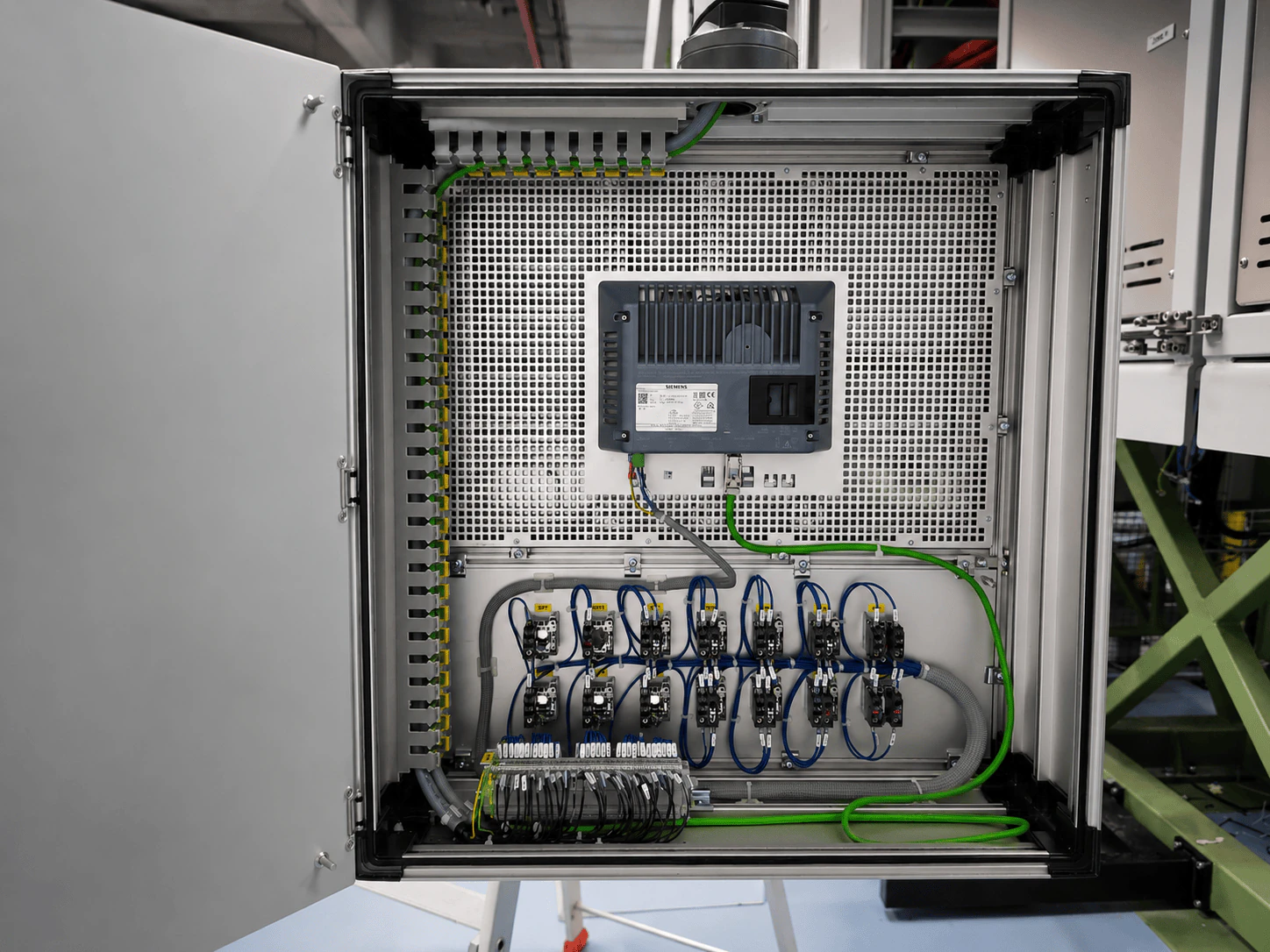
Wiring, components and terminal blocks must be readable with the panel open.
The quality that matters is what remains once the panel is in production: whoever works on it must find clear references, room to move and consistent documents.
The physical panel
When you open a panel, you can tell how it was built.
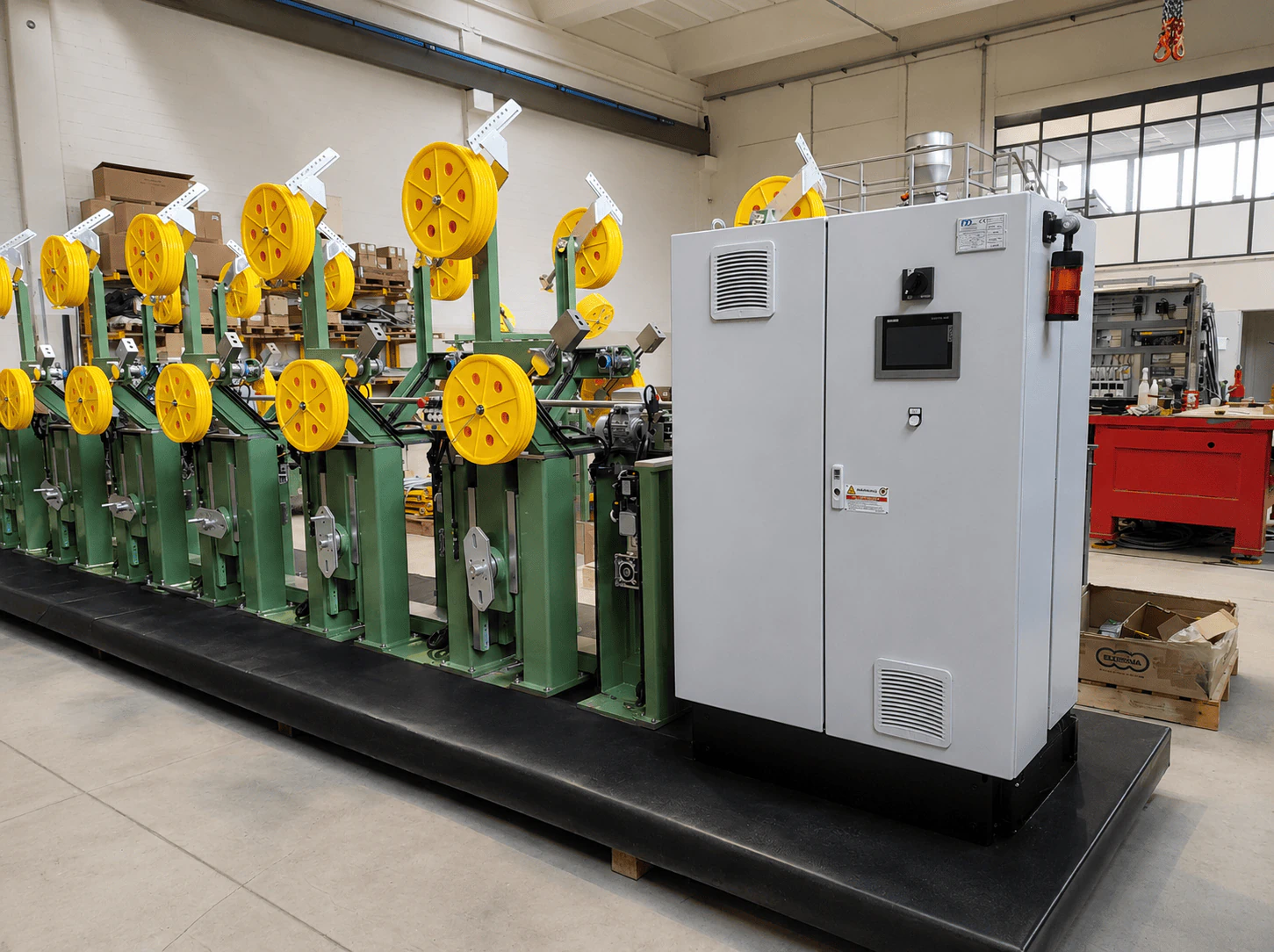
That is why we show our panels with real details: front, inside, terminal blocks, wiring and components. These are the elements that affect maintenance, testing and fault finding.
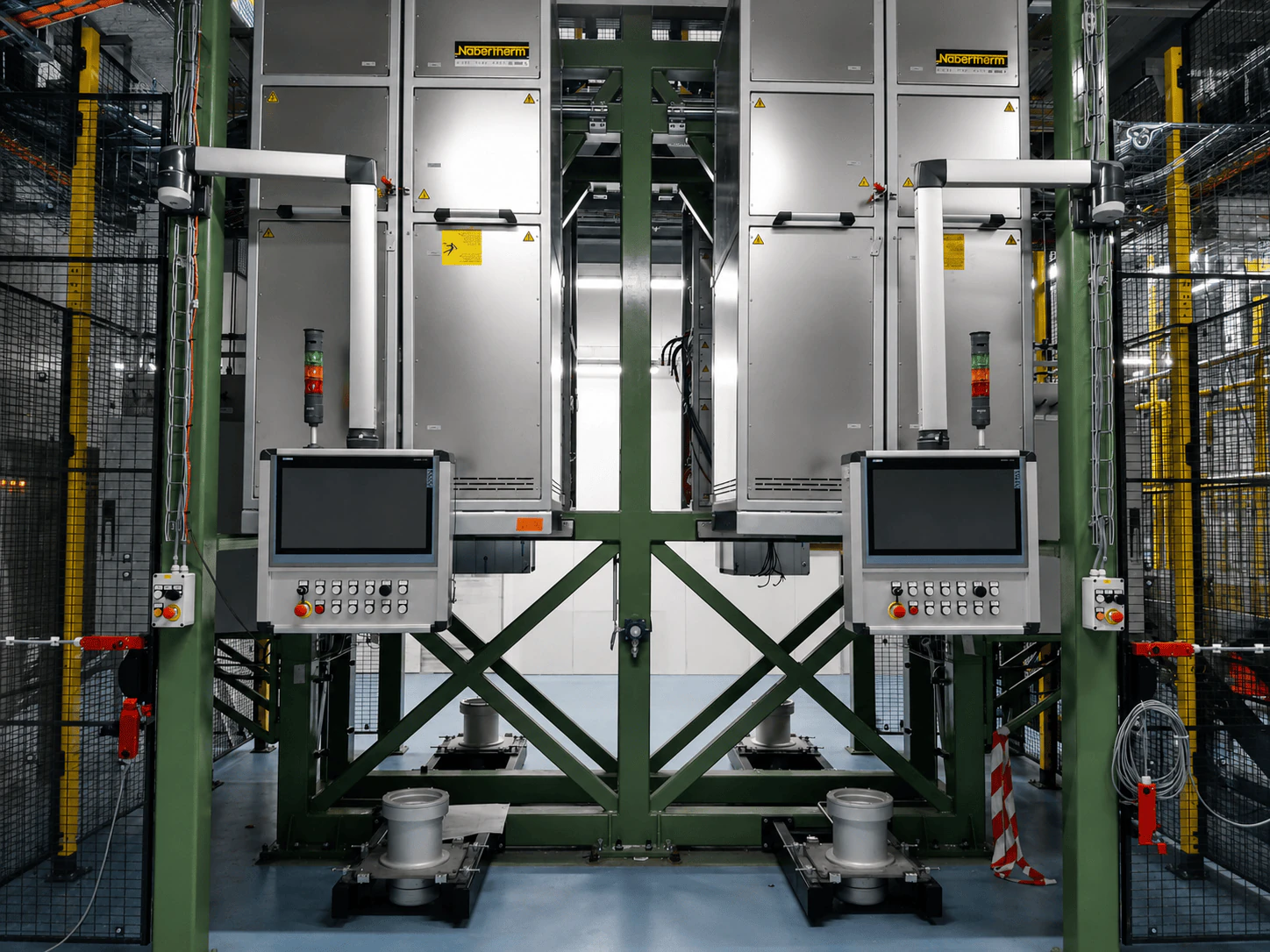
Clean access to HMI, buttons and indicators. Everything has to be readable, tidy and ready for the operator.
Reachable components, tidy trunking and spaces designed to work without wasting time.
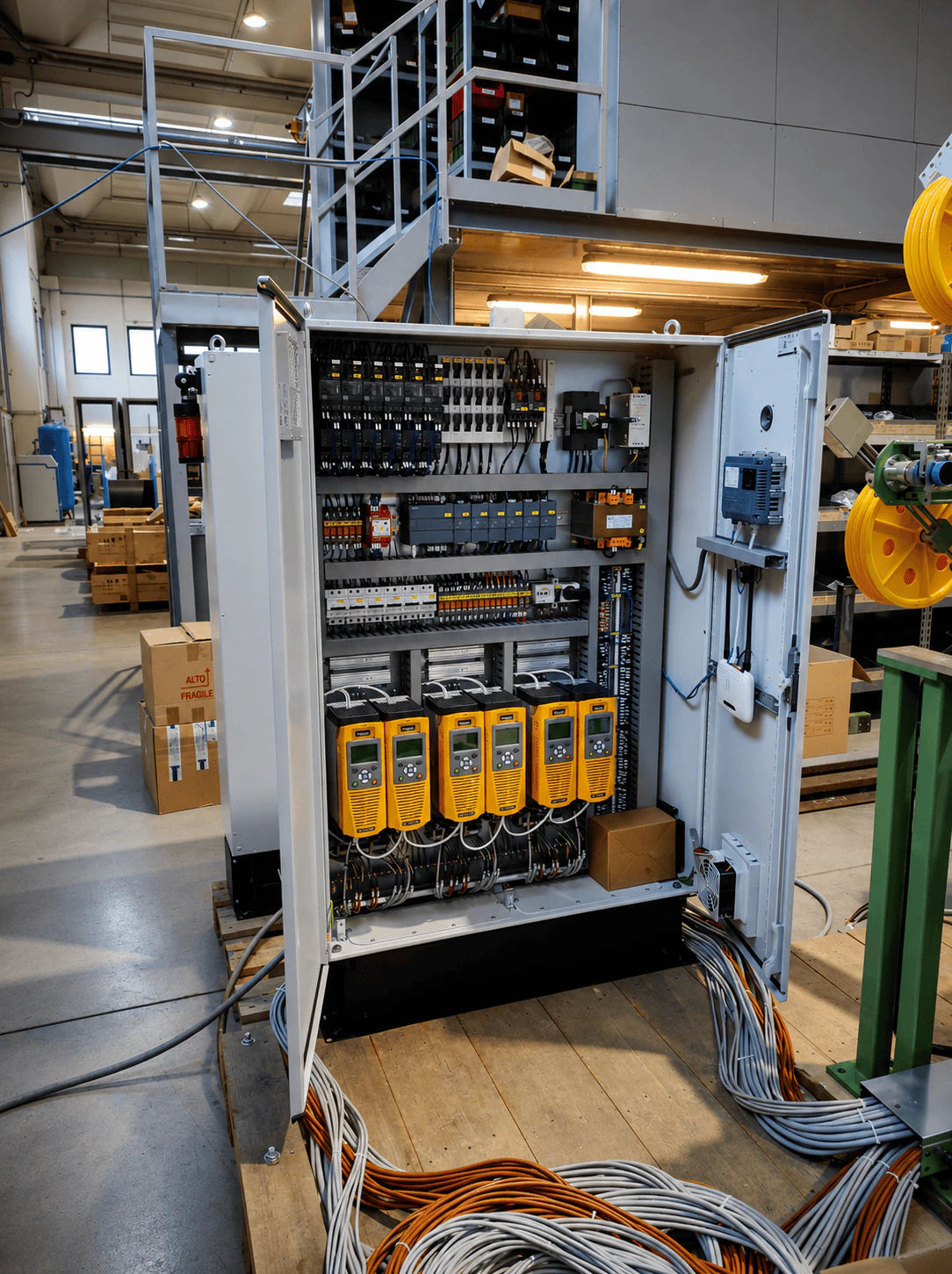
Cables, terminals and components clearly identifiable to simplify testing and fault finding.
How we work
How we build a control panel.
An orderly process reduces errors, rework and commissioning time.
Project intake
We review schematics, BOMs, project standards, panel constraints and delivery timelines.
Goal: start with clear technical data before assembly and wiring.Material preparation
Components, terminal blocks, trunking, cables, labelling and accessories are organised before wiring.
Goal: reduce waiting, replacements and rework during assembly.Wiring
The panel is wired following the schematic, layout and internal procedures, with attention to order and access.
Goal: keep terminal blocks, cable routes, components and references readable.Testing and delivery
We run electrical checks, functional tests, final documentation and delivery preparation.
Goal: deliver a panel with fewer unknowns on site.Future maintenance
A well-built panel shortens the time between symptom and action.
Readable tags, accessible components, aligned documentation and correct backups help you act when the line is already in production.
Who it's for
For companies that can't waste time on panels that are hard to read.
The service is designed for machine builders, integrators, technical departments and industrial companies that need control panels that are reliable, tidy and documented.
Machine builders
Panels ready to be integrated into automated machines, production lines and machine-side systems.
System integrators
Operational support in building panels connected to PLC, HMI, safety and industrial networks.
Industrial companies
Panels, changes and revamping for existing plants, maintenance and technical upgrades.
Concrete outputs
What we deliver together with the panel.
The delivery has to connect the physical panel, checks, documents and technical references. The customer has to be able to verify what was wired, tested and left ready for testing, maintenance and spare parts.
Wired and labelled panel
Tidy wiring, identifiable components, readable terminal blocks and consistent cable routes.
Internal checks
Electrical and functional checks before delivery, with attention to safety and continuity.
Final documentation
Schematic, tags, BOMs and references aligned with the panel as actually built.
Spare-part references
Traceable codes and components to simplify purchasing, replacements and future maintenance.
Ready for testing
Panel ready for integration with machine, HMI, safety, software and field tests.
Technical contact
Have a schematic, a BOM or a panel to build?
The first step is to share the schematic, BOM, technical specification, dimensional constraints and required timeline. From there we clarify materials, checks, final documents and the next action.