Non-integrated weighing
Scales, enables and thresholds must enter the logic in a controlled and verifiable way.
Industrial sector
Automation for weighing, dosing, recipes, mixing and batches in plants where repeatability, process control and production data define the final quality.
What we solve
In compounding, quality comes from repeatability: weights, times, sequences and data must be consistent from the first batch to the last.
Scales, enables and thresholds must enter the logic in a controlled and verifiable way.
Protected parameters, user levels and change history reduce unwanted variations.
Mixing, times, temperatures and states must be reconstructable per batch.
Operator and maintenance must immediately see which phase or enable is blocking the cycle.
Related services
From the electrical schematic to the software, from the panel to start-up: every service has a clear scope and stays coordinated with the others.

Schematics, BOMs, panel architectures and documentation ready for build and maintenance.

Machine logic, operator interfaces, supervision, diagnostics and production data collection.

Tidy wiring, traceable components and electrical tests before delivery.

Signal tests, functional checks, commissioning and operational support in the field.
From field to data
D&D builds control across field, panel, PLC/HMI and supervision to make recipes, weighing, states and batches readable without weighing down production.
A reliable recipe isn't just a list of parameters: it's a controlled sequence, verifiable and understandable by the people who produce.
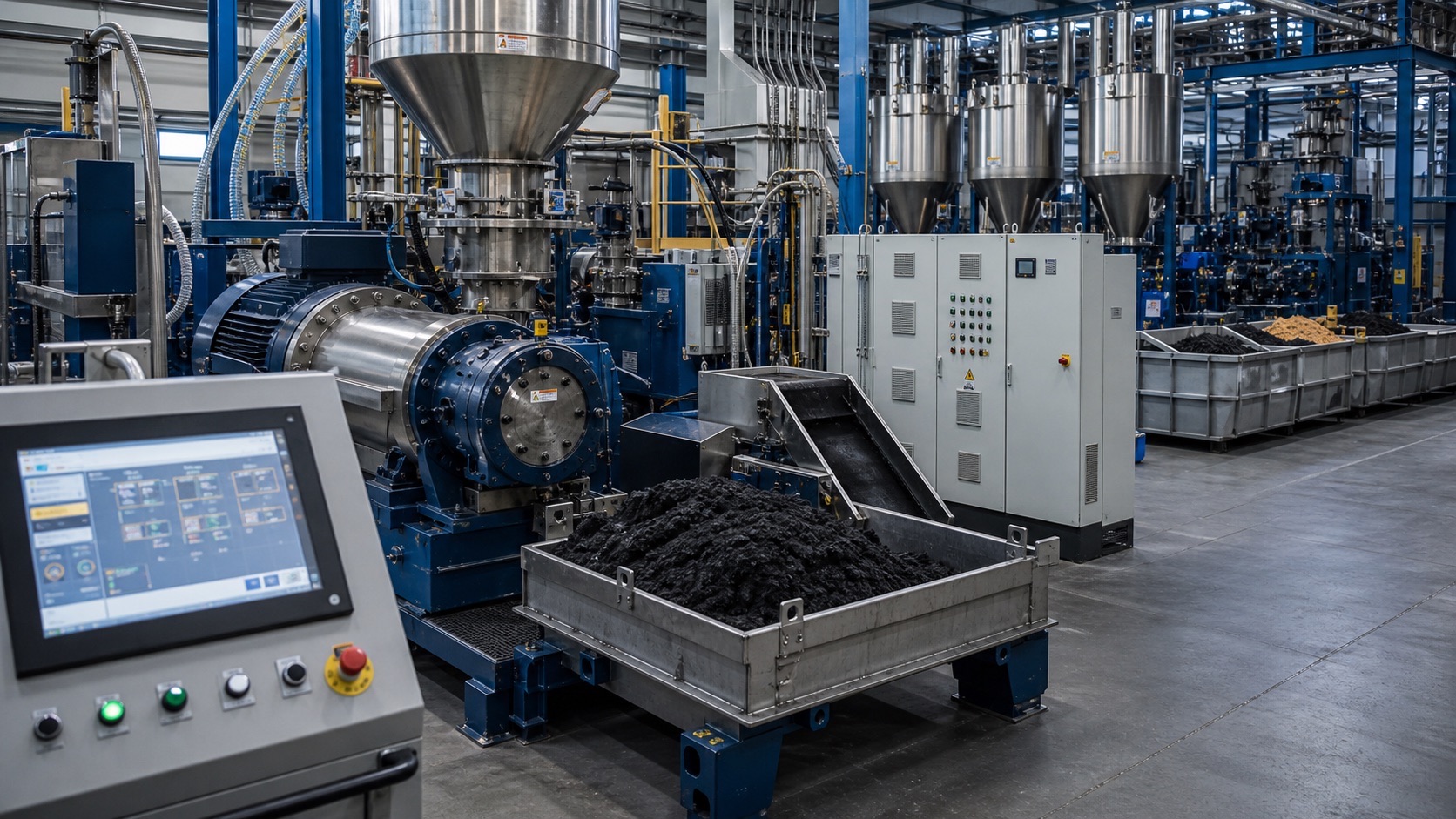
Survey of critical signals, machine conditions, field networks and operating constraints.
Electrical schematic, I/O, drives and components organised for testing and maintenance.
Sequences, recipes, alarms, trends and operator pages built around the process.
Functional tests, checks with the customer and field support through to production.
Typical applications
Each sector page goes into the detail of the areas where D&D can bring electrical, software, testing and operational support.
Signal integration, thresholds, enables and tolerance checks.
Sequences, recipes, actuators and process checks.
Times, temperatures, cycle states and protected parameters.
Recipe history, events, alarms and production data.
Pages for operation, maintenance, alarms and restarts.
PLC/HMI migration and panel upgrade with functional tests.
D&D method
On compounding plants you don't need a generic solution. You need a technical reading of constraints, signals, downtime, operators and real goals.
We collect documentation, plant status, recurring problems and the expected result.
Panel, PLC, HMI and supervision are designed as one operating system.
Critical functions are tested to reduce the risk at start-up.
The final step is making the solution usable by operators and maintenance.
Related experience
Concrete references to understand how D&D translates the sector into automation, panel, software and testing.
A new real plant from this sector will be online soon, with context and results.
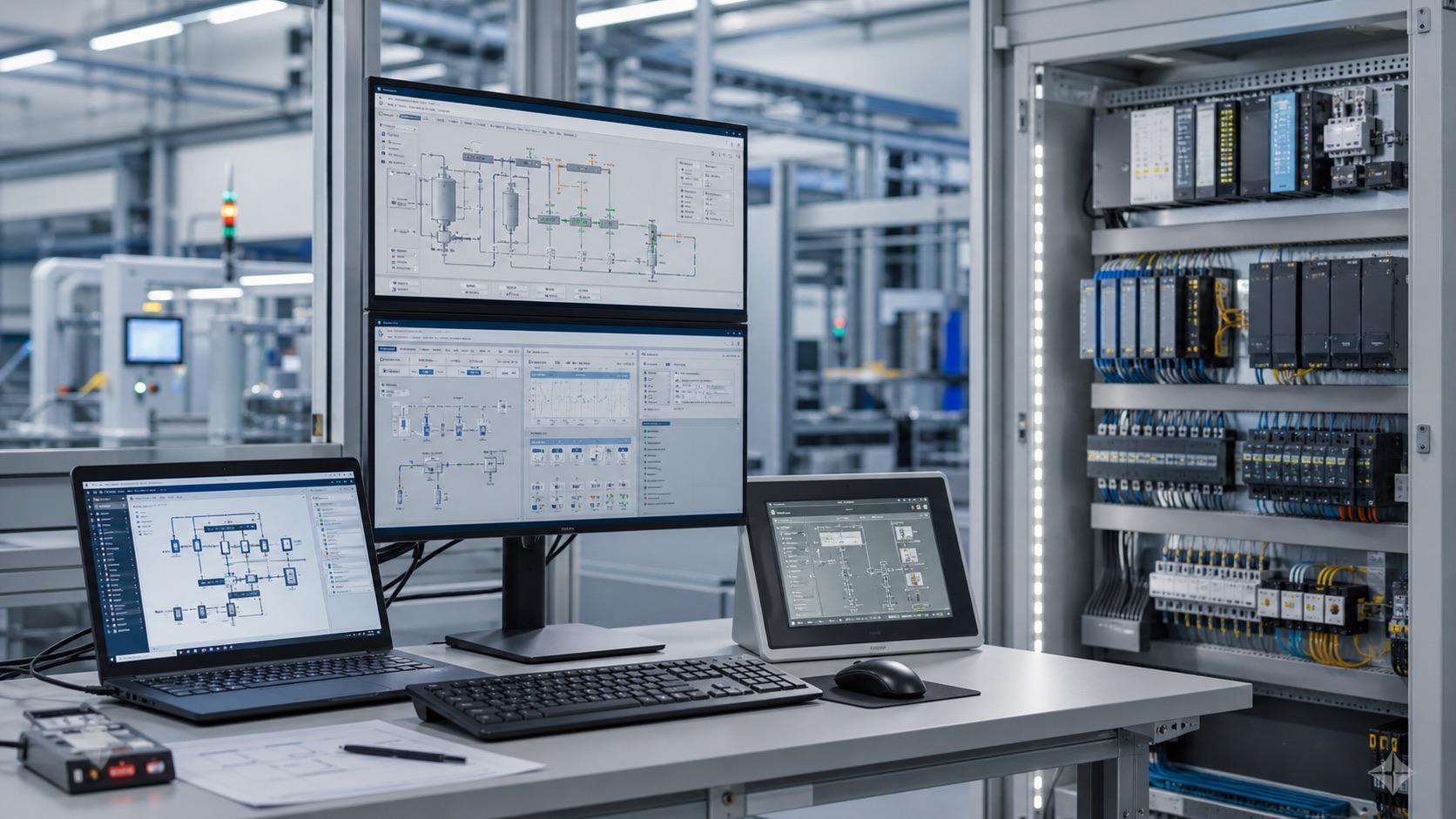
Approach to architecture, diagnostics, recipes and supervision data.
Operational questions
Yes, after checking the current signals, protocols, tolerances and logic. The goal is to bring weighing and dosing into a controlled flow.
With structured parameters, user levels, change management and HMI pages designed to reduce operating errors.
It depends on the process. When needed, we define which data to keep: recipe, weights, times, temperatures, events, alarms and operators.
Plant schematic, ingredient or phase list, installed PLC/HMI, scales or instruments present, quality issues and the goal of the intervention.
Technical contact
You don't need a complete specification. The sector, machine or line, goal and main constraints are enough: your request reaches the D&D technical team already in context.