
Challenge
Make a complex plant governable in an environment where reading the states has to be immediate.
Marine · Prysmian Group
Automation and control for a plant installed aboard a vessel, where sequences, enables and diagnostics have to stay readable even in a demanding operating environment.
Overview
The project covers a marine cable-laying system installed aboard the Ulisse vessel. D&D's work connected PLC logic, operator interfaces, panel and field signals into a single architecture designed for real work at sea.
Technical reading
A case study isn't just a gallery: it links context, technical choice and operational result to show where D&D creates value.
Make a complex plant governable in an environment where reading the states has to be immediate.
PLC sequences, dedicated HMIs, enables and diagnostics organised around the main laying operations.
A system that is more readable for operator and maintenance, with commands, feedback and alarms concentrated at the right stations.
Visual case study
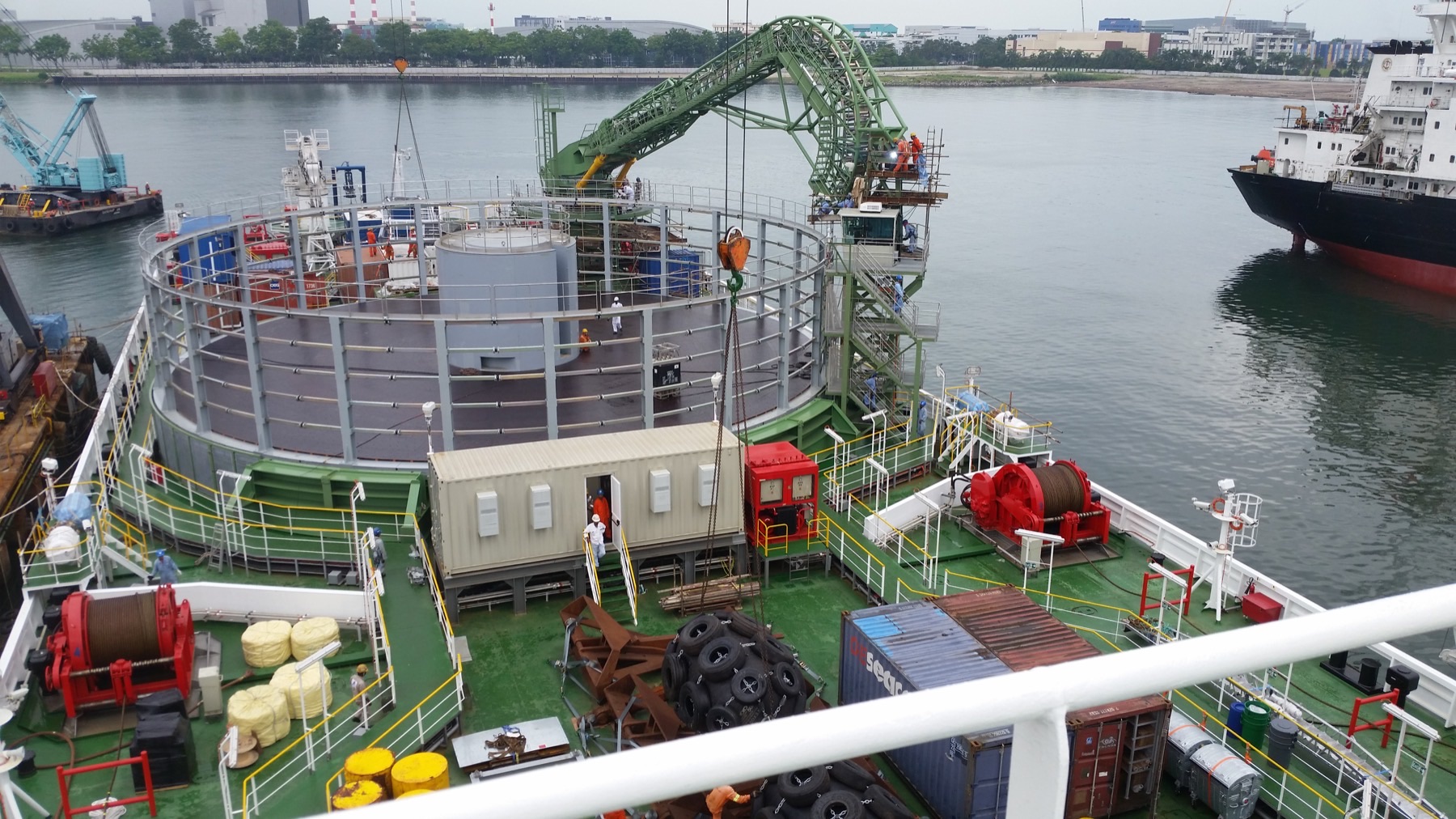
The visible part of the plant is only half the project. Explore the laying deck: behind every element there's the automation you don't see.
01 / 04
The large rotating structure that stores the cable on board before laying.
The logic governing the carousel's rotation and pay-out, keeping the cable at the right tension as it's laid at sea.
02 / 04
The arm that guides the cable from the carousel out to the sea.
The coordination with carousel and traction so the cable pays out continuously, without jerks or slack.
03 / 04
The on-board cabin with the operator station and HMI.
PLC, control panels and diagnostics that concentrate plant control and make every state readable during laying.
04 / 04
The winches and handling devices across the deck.
The enables and interlocks that make them operable only under the intended safety conditions.
Hover the numbered points — or tap them on mobile — to read what's behind the scenes.
In depth
Laying the Ulisse cable isn't a single machine but a system: carousel, traction, brakes and instrumentation must work together, in a moving environment with tight intervention windows. Here's how D&D made it manageable, step by step.
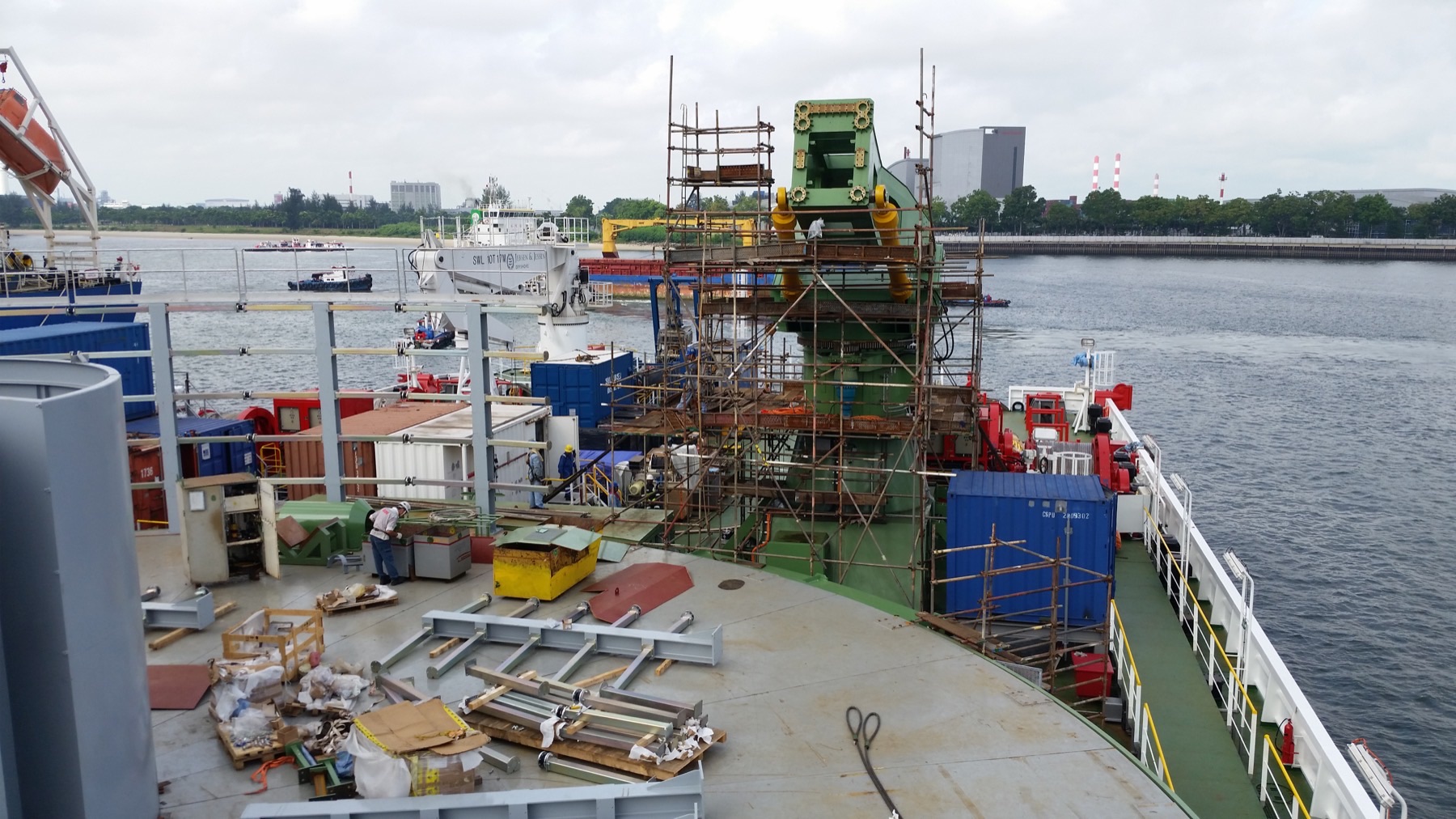
We studied the real plant — storage carousel, caterpillar traction, brakes, guide crane — and translated every laying operation into machine states, enables and safety conditions, shared with the operator and machine side. Each phase (load, run, lay, stop) has defined permissions and interlocks, so behaviour stays predictable even with the ship moving.
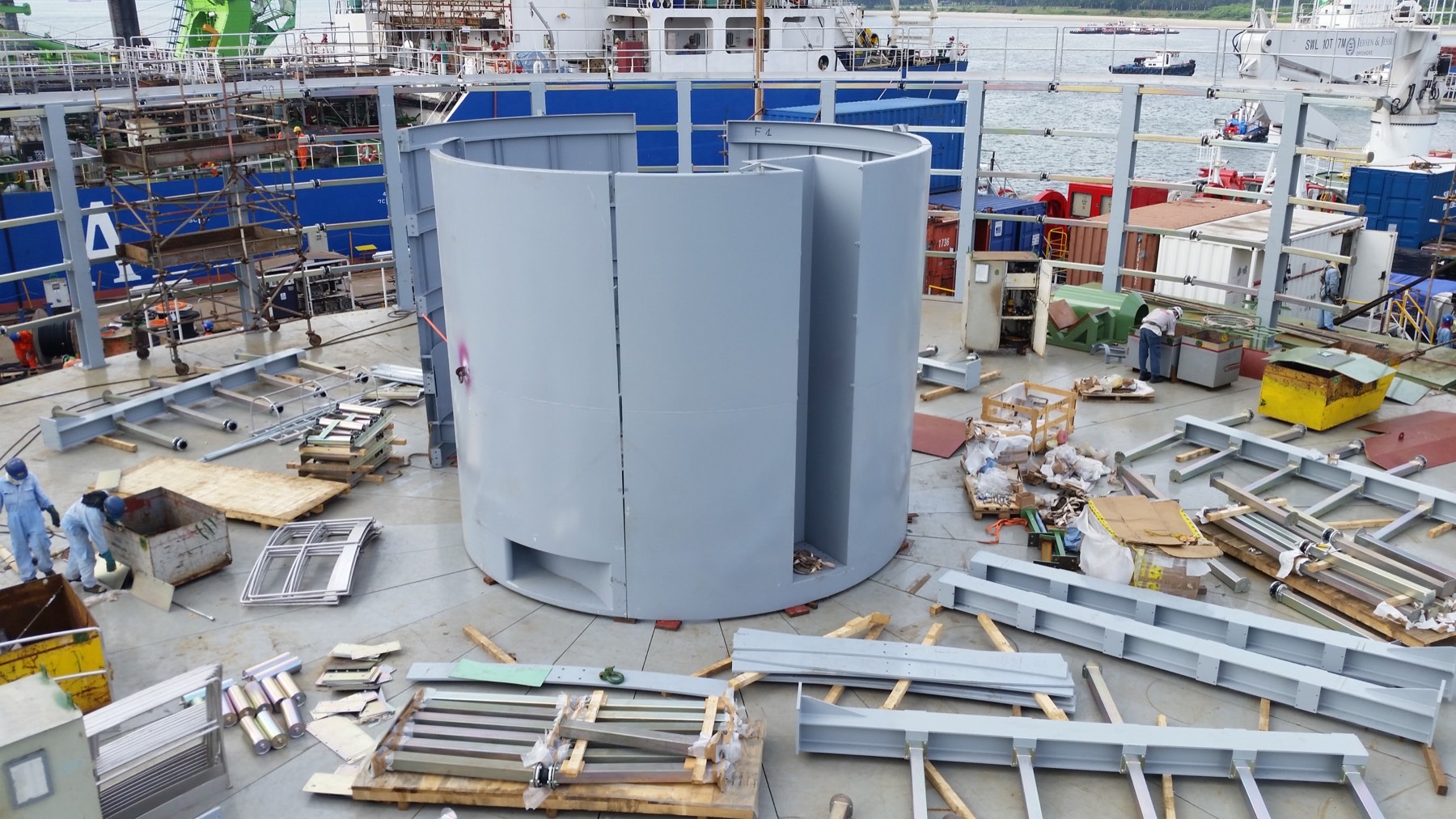
The heart of the project is a single PLC logic coordinating carousel, caterpillar, brakes and direction. Instead of isolated commands, one program keeps pay-out and traction synchronised, with controlled ramps and management of speed and rotation direction. This avoids misalignment and stress on the cable, and leaves one place to read and maintain the machine's behaviour.
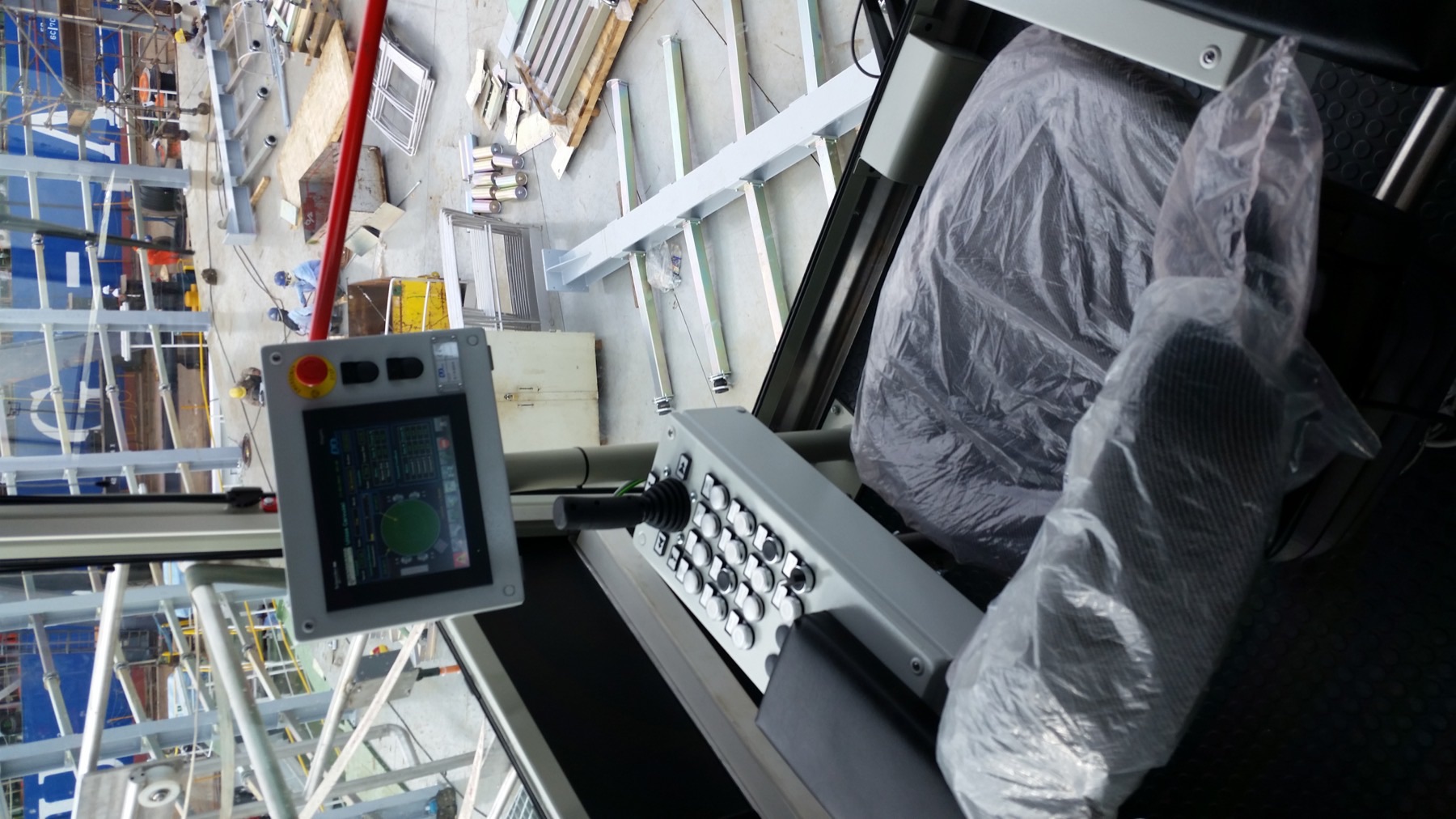
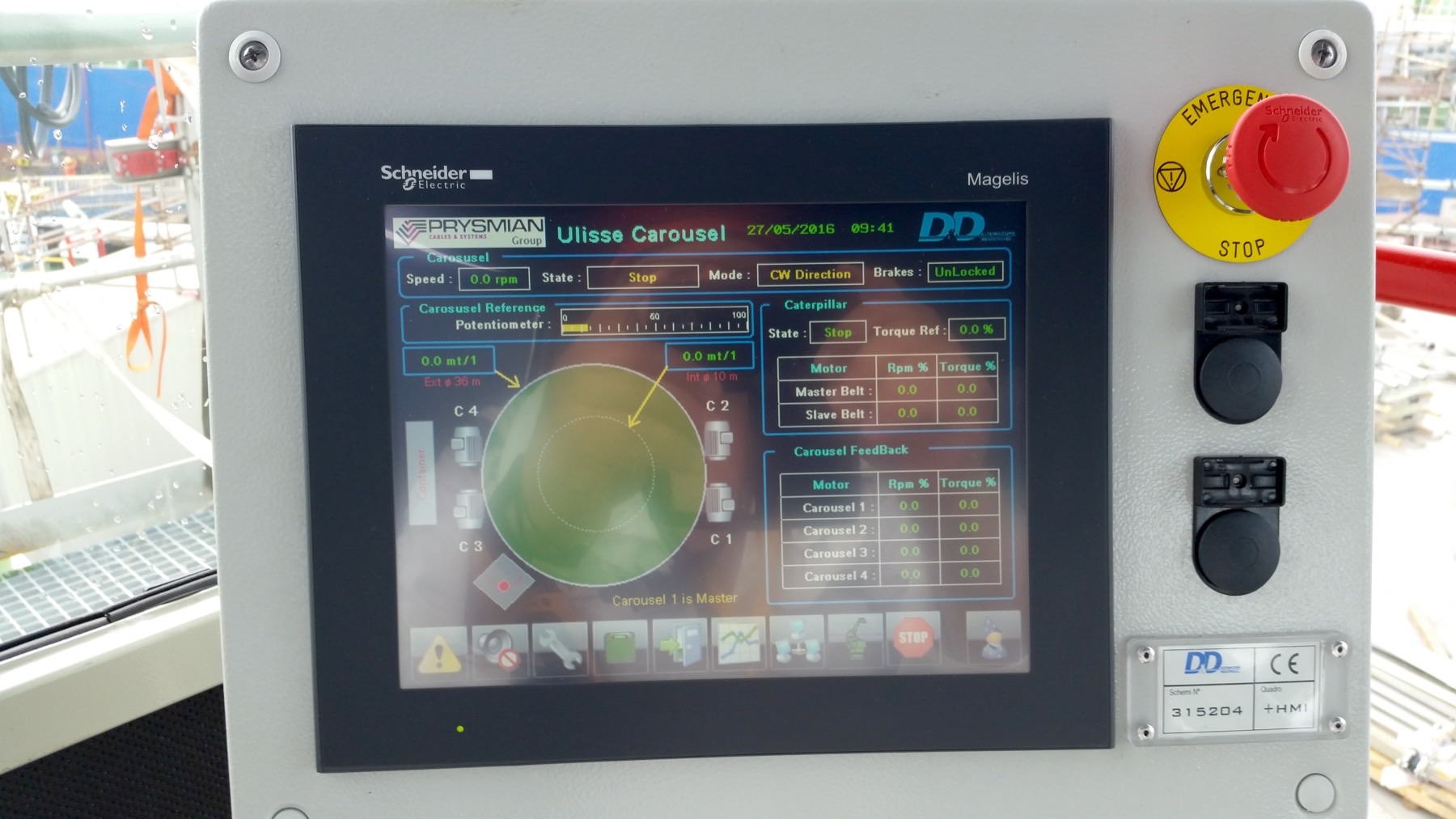
The HMI is built around the operation, not the parameters: plant status, speed, brakes, direction and active alarms, with controlled restart logic. Diagnostics don't just flag an error — they take the operator straight to the critical point. The result is faster, less ambiguous conduction, with less downtime.
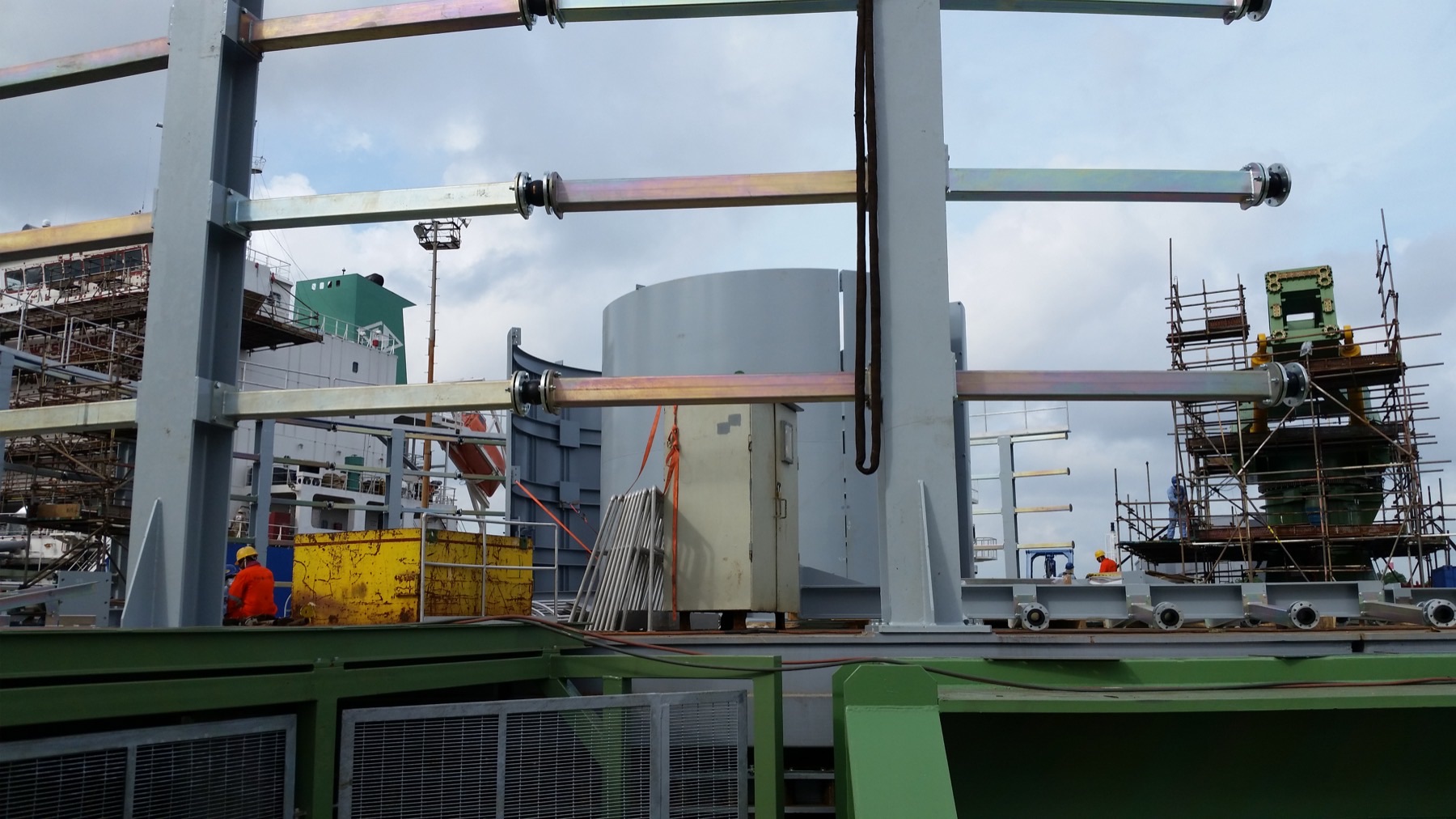
The control panel is designed and wired in an orderly, traceable way, ready for maintenance. Before commissioning we verified signals, enables and sequences with functional tests, then supported start-up directly on board. At sea the margin to fix things is minimal: reaching operation with already-validated behaviour reduces risks and surprises.
Visual documentation
The project is told through real photos: ship context, HMI, operator station, local controls and panel.
Related projects
Consistent links by technology, sector or type of intervention.

A vertical system with structure, panels, HMI and alarms designed to make process operation and maintenance more readable.

A real workshop line with reels, drives, an on-board panel and wiring ready for testing and commissioning.
Related services
A project page should also lead to the right service: engineering, software, panel and start-up stay separate but readable.

Schematics, BOMs, panel architectures and documentation ready for build and maintenance.

Machine logic, operator interfaces, supervision, diagnostics and production data collection.
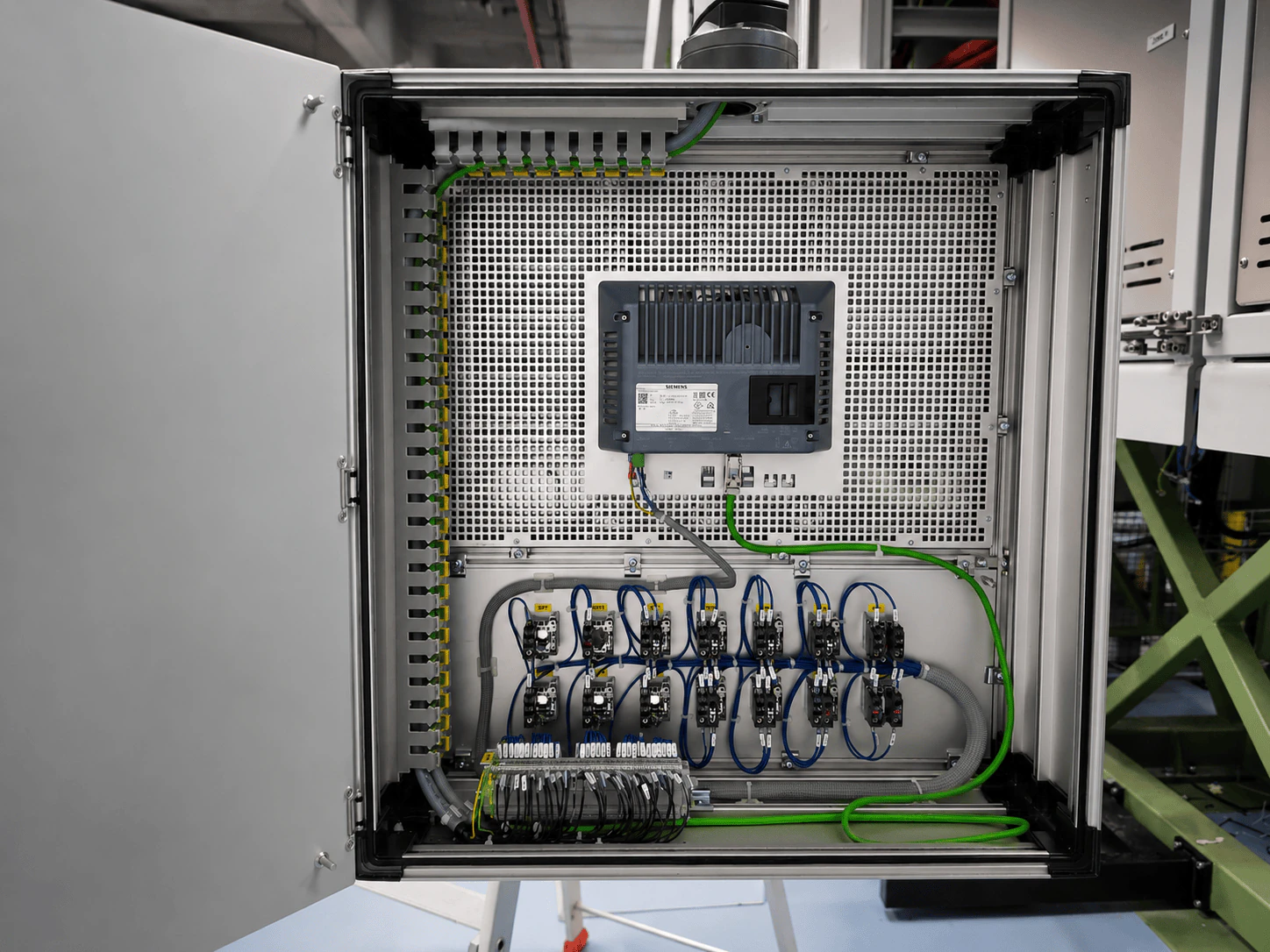
Wiring, functional checks, orderly components and panel traceability before release.

Signal tests, functional checks, commissioning and operational support in the field.
Have a similar plant?
We gather constraints, layout, signals and operational goals to work out whether you need PLC logic, control panels, HMI, revamping or field support.