Challenge
Coordinate vertical movements, gas/utilities, area safety and process states in a very compact layout.
Cable & fiber optics · Confidential client
A vertical system with structure, panels, HMI and alarms designed to make process operation and maintenance more readable.
Overview
The photos show a vertical structure with a touch HMI, alarms, panels and machine side. The page highlights the automation work where interface, physical signals and diagnostics have to help the operator read the process without wasting time.
Technical reading
A case study isn't just a gallery: it links context, technical choice and operational result to show where D&D creates value.
Coordinate vertical movements, gas/utilities, area safety and process states in a very compact layout.
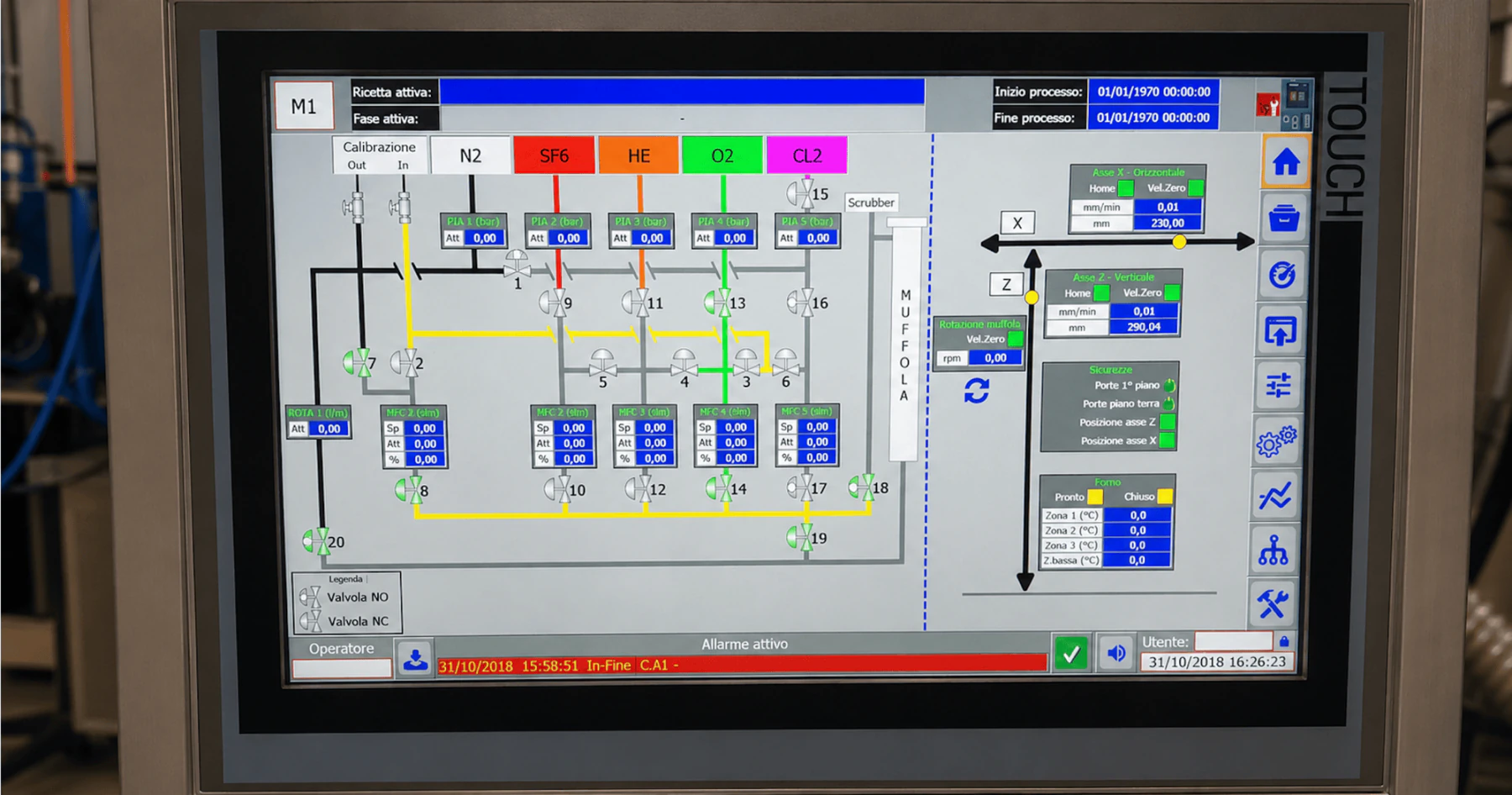
An HMI with a process mimic, axis states, active alarms and quick navigation between operating functions.
Better machine readability, control of critical parameters and faster diagnosis in the field.
Visual case study
The visible part of the machine is only half the project. Explore the tower: behind every element there's the automation you don't see.

01 / 04
The mimic with active recipe, phases, parameters and safety states.
The logic that holds together the vertical process, axes and alarms and presents them in a single screen, readable at a glance.
02 / 04
The vertical structure with the furnaces and the tower process.
The sequence that governs the process phases, with the enables between one phase and the next and the safety conditions.
03 / 04
The indicator lights on the machine.
The diagnostics that link each alarm to its cause and station, so the intervention is targeted and quick instead of trial and error.
04 / 04
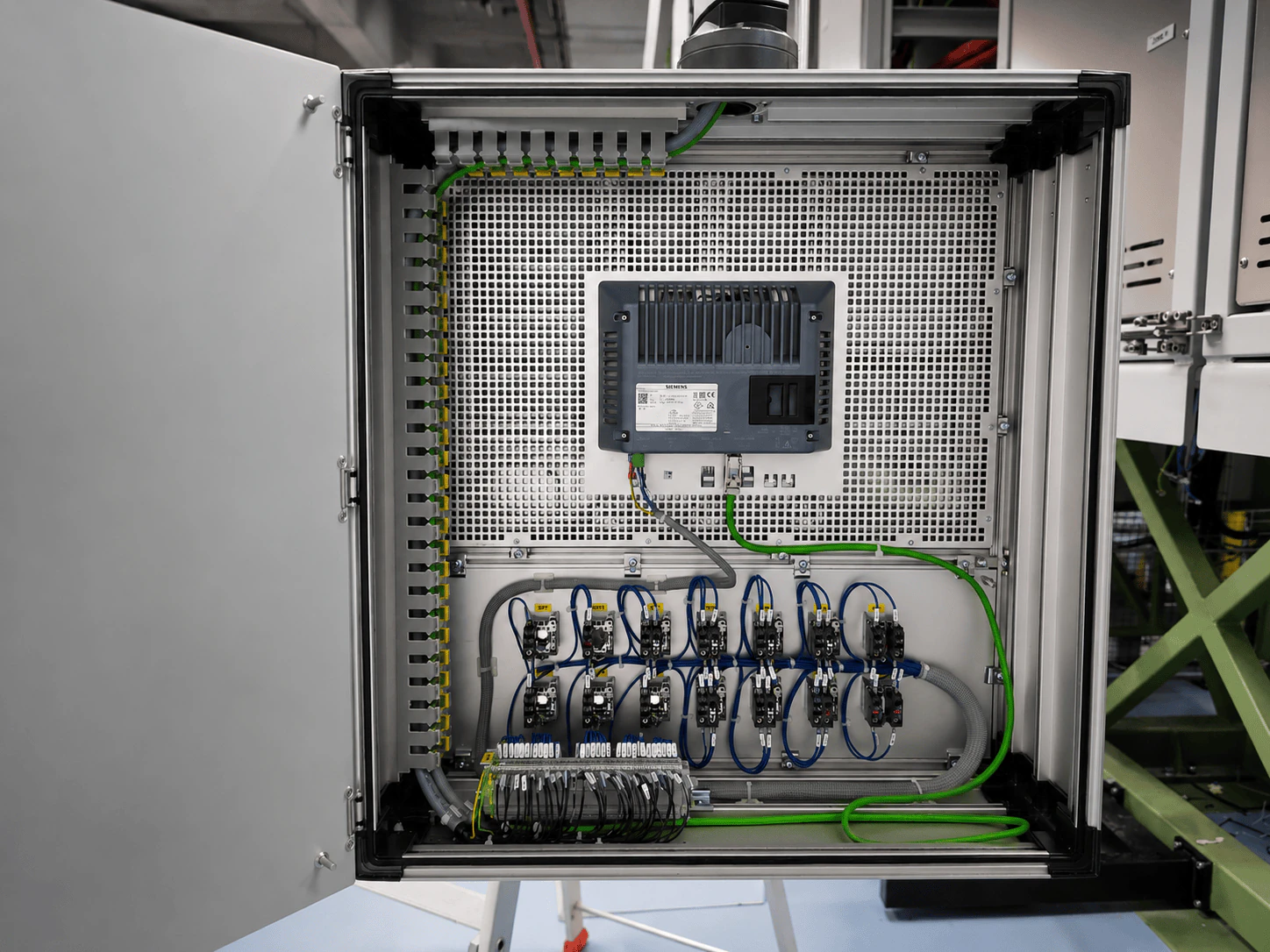
Pushbutton stations, controls and an emergency stop within reach.
The enables and interlocks that make every command safe and consistent with the real process state.
Hover the numbered points — or tap them on mobile — to read what's behind the scenes.
In depth
Fiber optic towers are a vertical process: structure, furnaces, axes and safety have to read as a single system. Here's how D&D made it manageable, step by step.
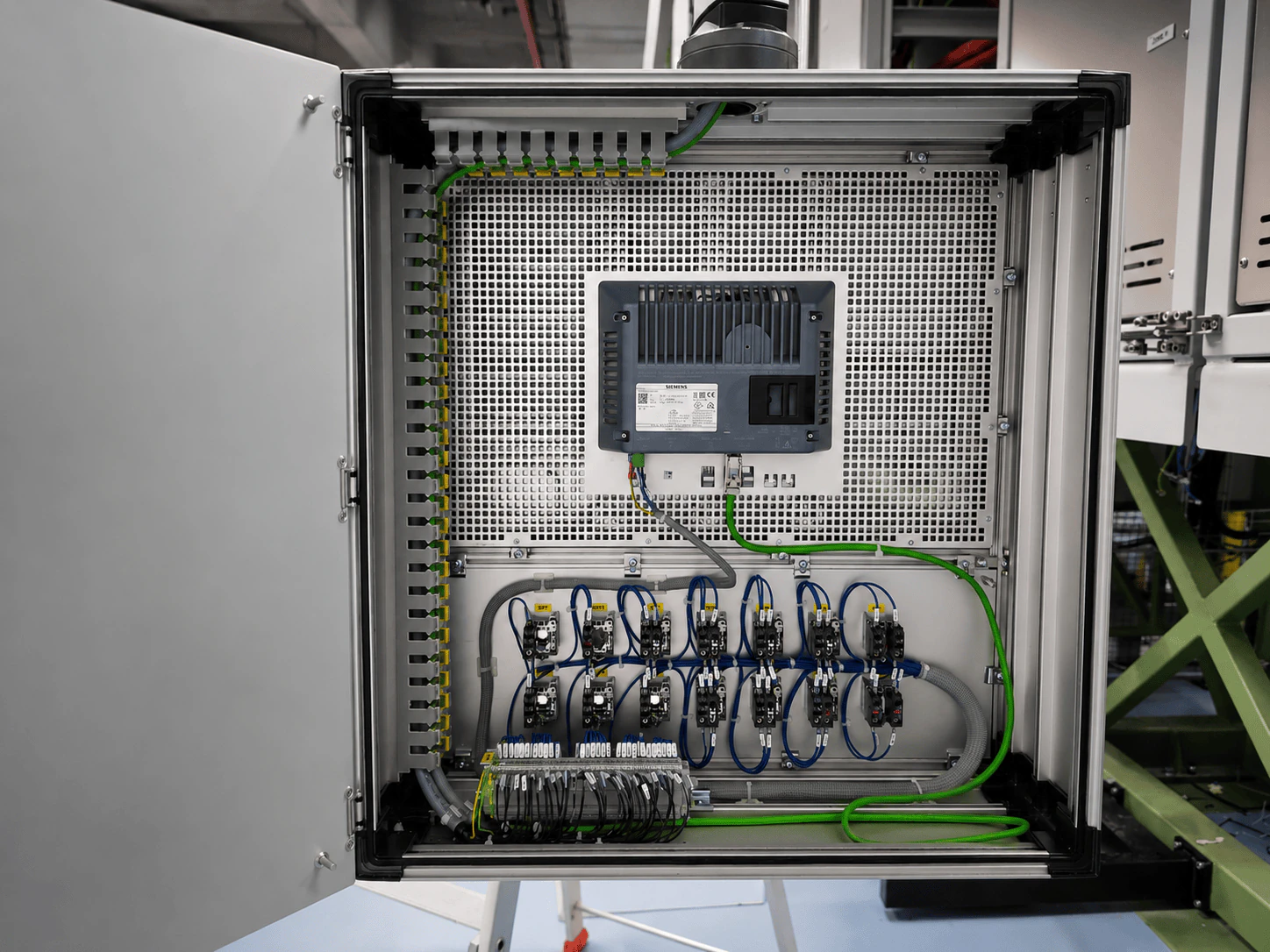
We collected machine states, sensors, actuators, alarms and safety conditions into an orderly data base. It's the starting point: if the signals are clear and organised, PLC and HMI can work well and diagnostics become possible.
The HMI mimic shows active recipe, phases, parameters, axes and safety states. An interface built around the process — not the raw parameters — makes operation faster and less ambiguous for the operator.
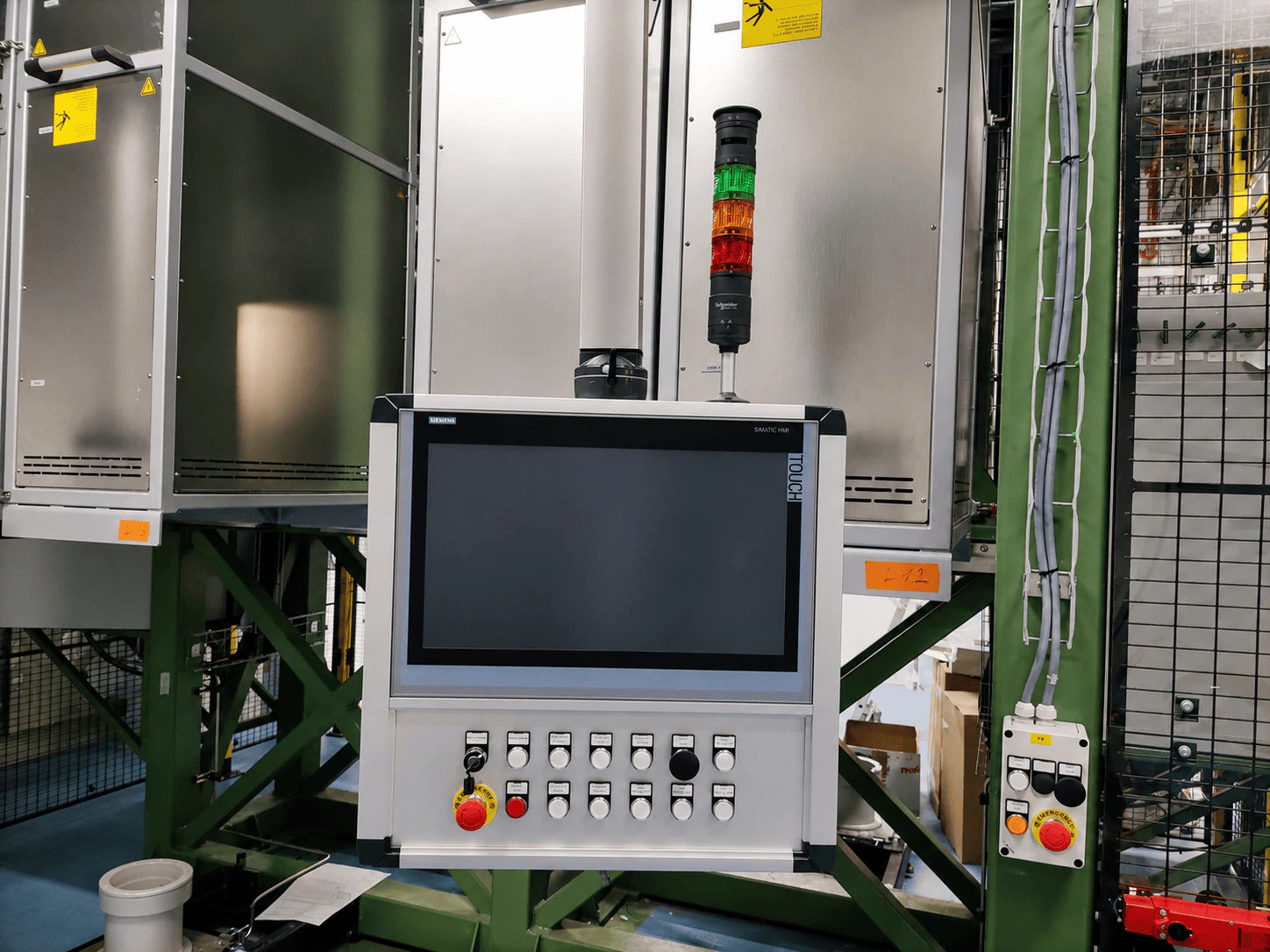
Panels, pushbutton stations, indicator lights and local devices are integrated into the system. Physical feedback on the machine is consistent with the software diagnostics, so the operator trusts what they see and acts accordingly.
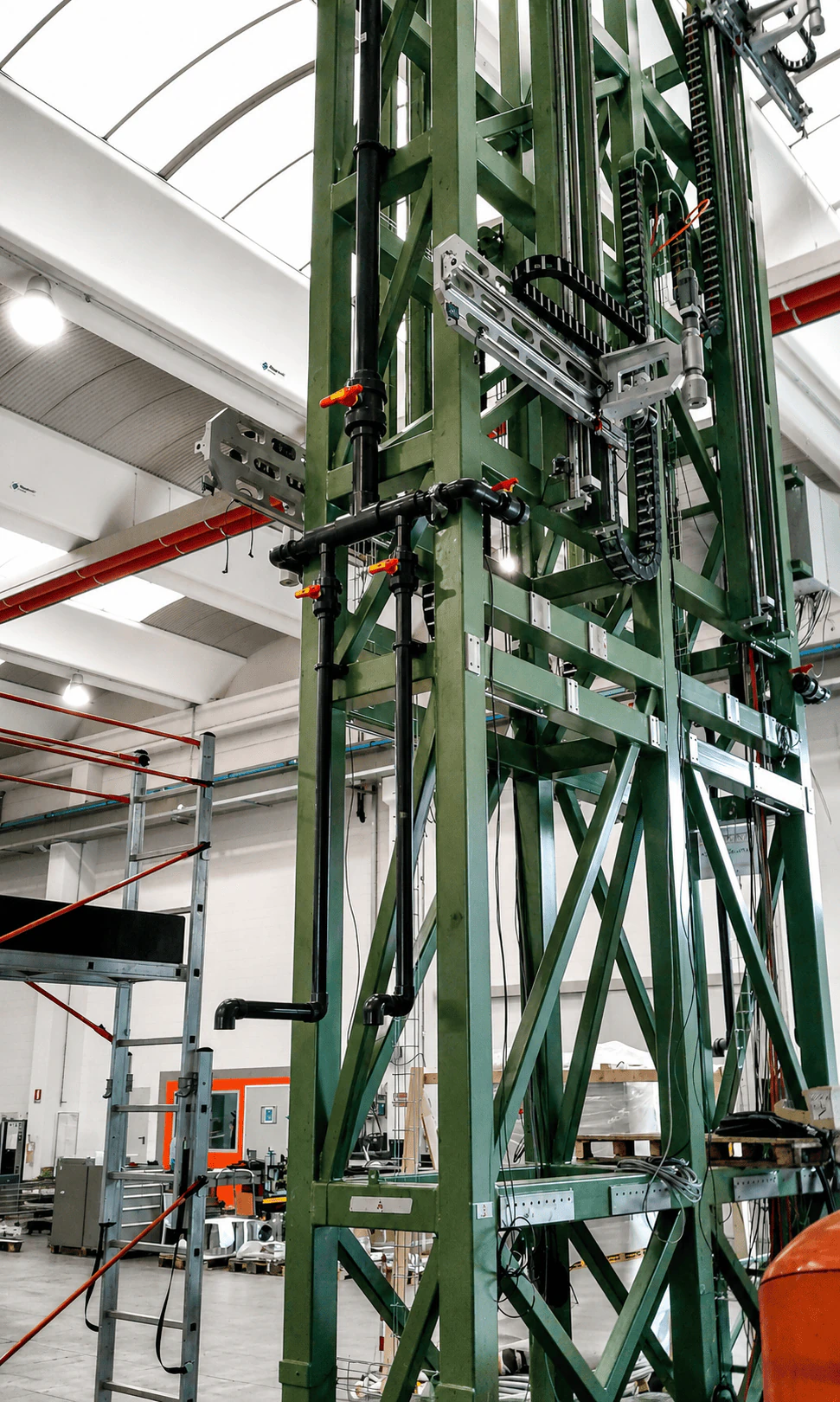
Before delivery we check sequences, thresholds and restart conditions with functional tests. The machine reaches production clearer for operator and maintenance, with behaviour already validated and less room for ambiguity.
Visual documentation
The images show structure, HMI, panels, alarms and machine-side details.
Related projects
Consistent links by technology, sector or type of intervention.

Automation and control for a plant installed aboard a vessel, where sequences, enables and diagnostics have to stay readable even in a demanding operating environment.

A real workshop line with reels, drives, an on-board panel and wiring ready for testing and commissioning.
Related services
A project page should also lead to the right service: engineering, software, panel and start-up stay separate but readable.

Schematics, BOMs, panel architectures and documentation ready for build and maintenance.

Machine logic, operator interfaces, supervision, diagnostics and production data collection.
Wiring, functional checks, orderly components and panel traceability before release.

Signal tests, functional checks, commissioning and operational support in the field.
Have a similar plant?
We gather constraints, layout, signals and operational goals to work out whether you need PLC logic, control panels, HMI, revamping or field support.