Challenge
Bring order to motors, signals, field devices and panel without making testing difficult.
Line automation · Confidential client
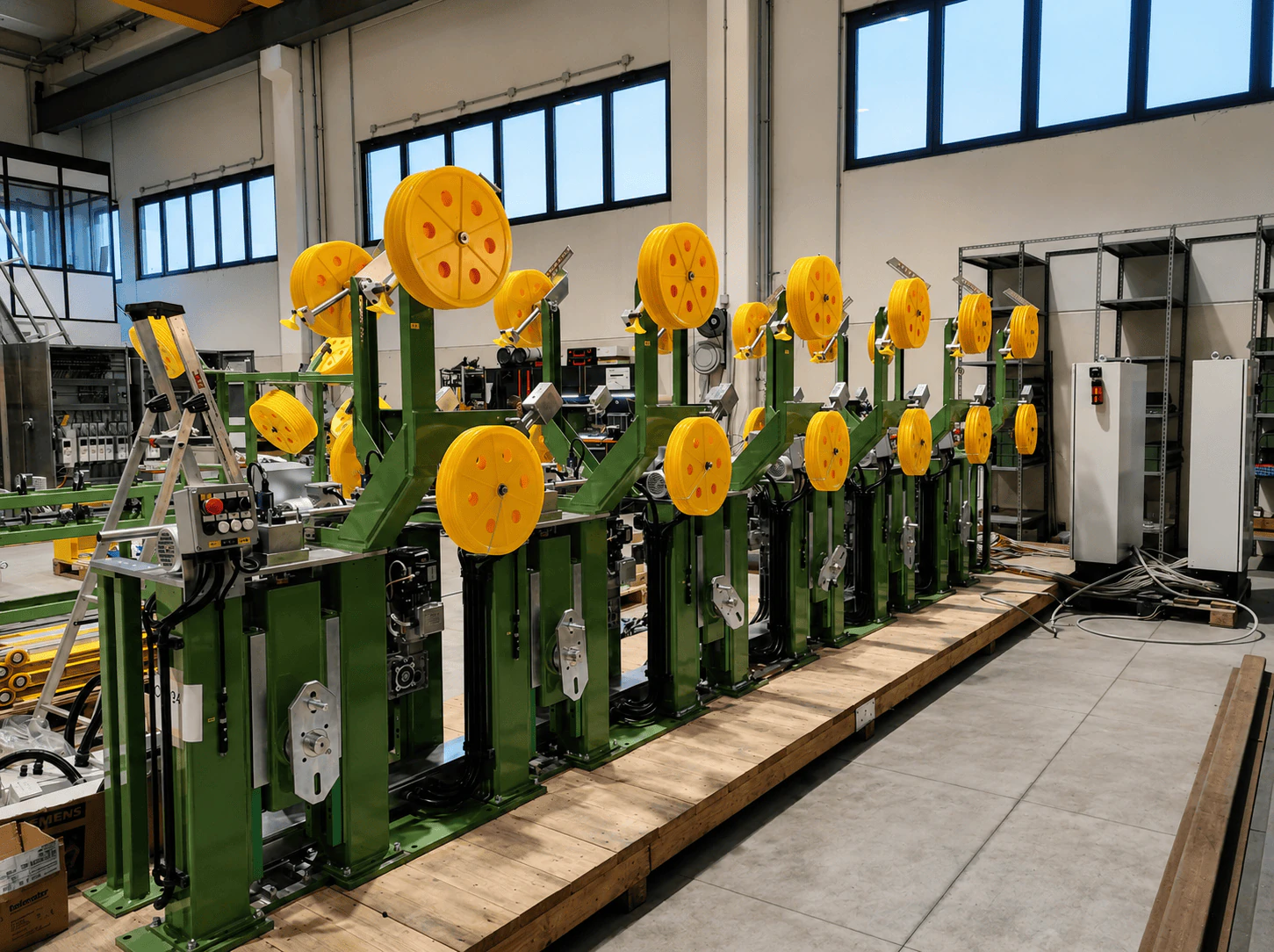
A real workshop line with reels, drives, an on-board panel and wiring ready for testing and commissioning.
Overview
The photos show a line with many stations, drives, reels and an integrated control panel. The story highlights the D&D value: electrical engineering, wiring, field signals, control logic and functional testing.
Technical reading
A case study isn't just a gallery: it links context, technical choice and operational result to show where D&D creates value.
Bring order to motors, signals, field devices and panel without making testing difficult.
A wired panel with drives, organised components, traceable wiring and coordinated line control.
A system more ready for commissioning, with readable components and maintenance less dependent on a single technician's memory.
Visual case study
The visible part of the line is only half the project. Explore the plant: behind every component there's the automation you don't see.

01 / 04
The reels that feed the tube along the line's work stations.
The pull and synchronisation management that keeps the material at constant tension from one station to the next.
02 / 04
The motors and drive units of the individual work stations.
The PLC logic that coordinates speeds and phases, so the whole line works as a single system, not separate machines.
03 / 04
The operator panel on the line, on the control panel.
The diagnostics that take you straight to the right station or alarm, without hunting for it by hand along the whole line.
04 / 04
The electrical panel integrated on the plant.
Drives, protections and wiring designed and labelled to make testing and maintenance simpler and less dependent on one technician's memory.
Hover the numbered points — or tap them on mobile — to read what's behind the scenes.
In depth
The tube line isn't a single machine but many stations that have to work in sync. Here's how D&D turned it into an orderly, testable system, step by step.
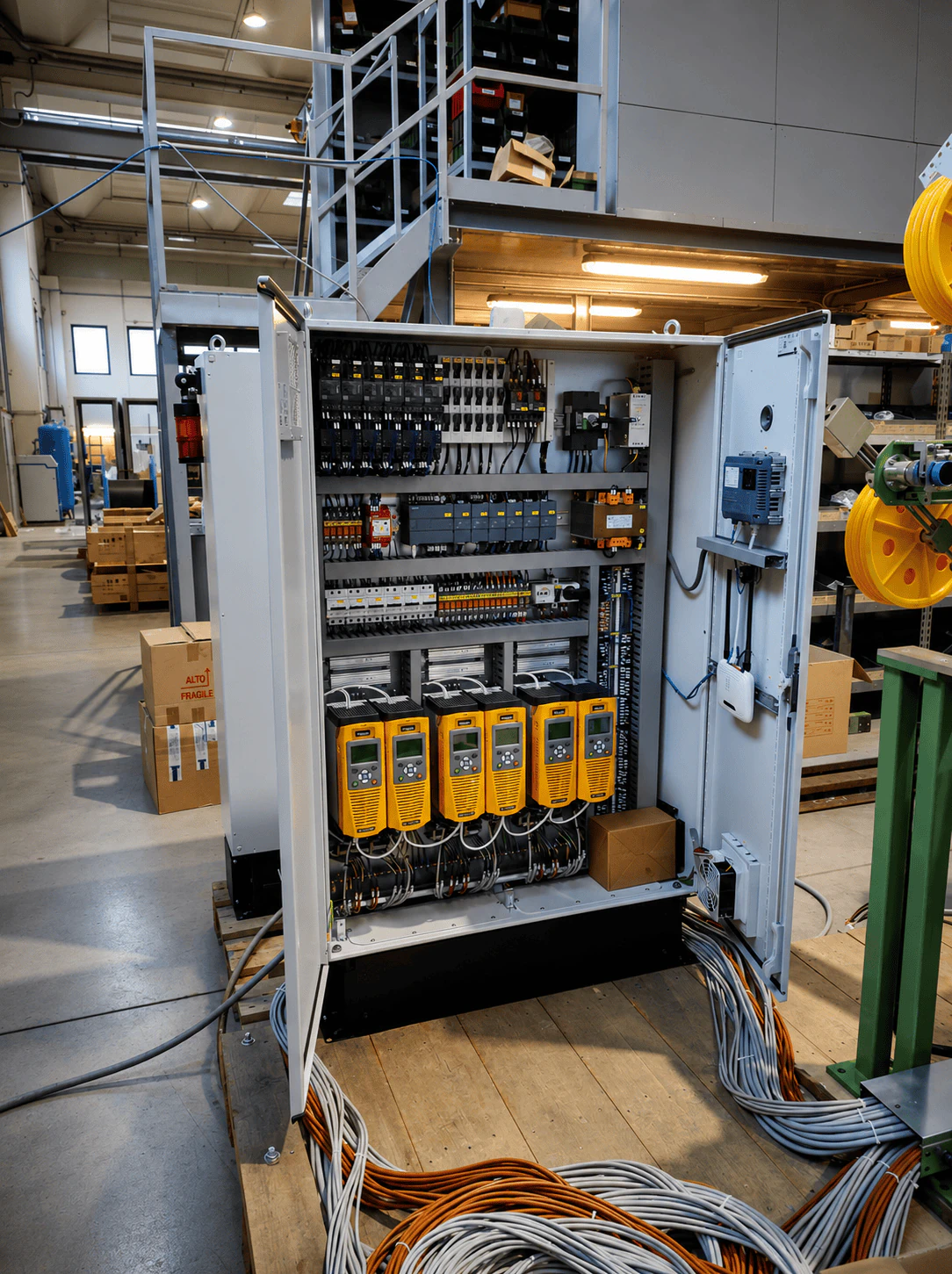
Before assembly we defined supplies, drives, I/O, protections and terminal blocks. A clear electrical architecture on paper makes everything else simpler: wiring, testing and maintenance start from a readable schematic, not from improvisation.
The panel is assembled and wired in an orderly, labelled way, with components organised and internal checks done. A readable panel is one that is tested sooner and maintained better, without depending on a single technician's memory.
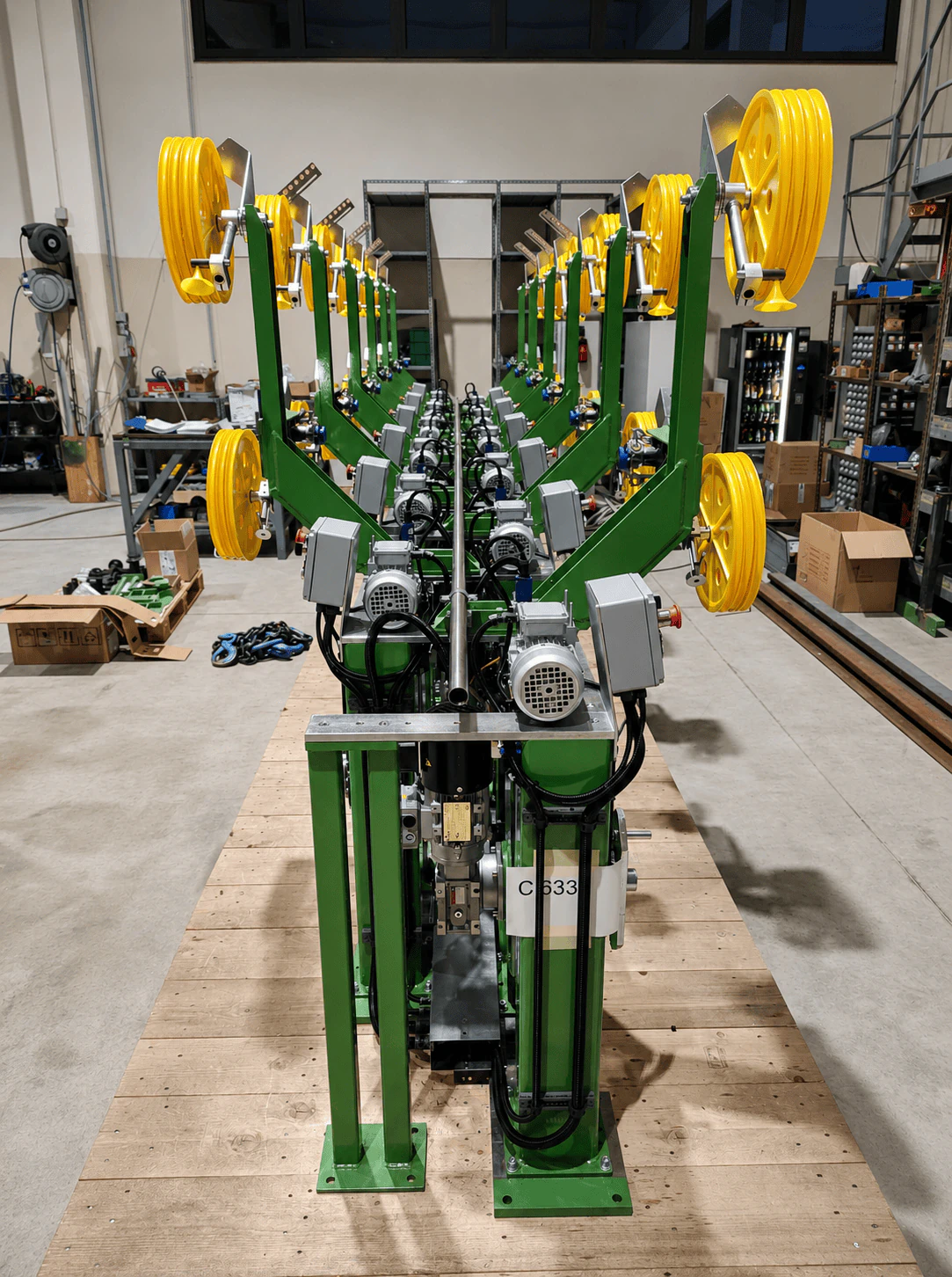
Motors, sensors, controls and machine-side devices are connected and made consistent with the control logic. Each station of the line becomes part of a single system, with physical signals that match what the PLC expects.
Before delivery we verify sequences, alarms, drives and restart conditions with functional tests. Start-up at the customer begins from a solid base, with behaviour already validated, reducing surprises in the field.
Visual documentation
The images highlight the overall view, line axis, open panel and power wiring.
Related projects
Consistent links by technology, sector or type of intervention.

A vertical system with structure, panels, HMI and alarms designed to make process operation and maintenance more readable.

Automation and control for a plant installed aboard a vessel, where sequences, enables and diagnostics have to stay readable even in a demanding operating environment.
Related services
A project page should also lead to the right service: engineering, software, panel and start-up stay separate but readable.

Schematics, BOMs, panel architectures and documentation ready for build and maintenance.

Machine logic, operator interfaces, supervision, diagnostics and production data collection.
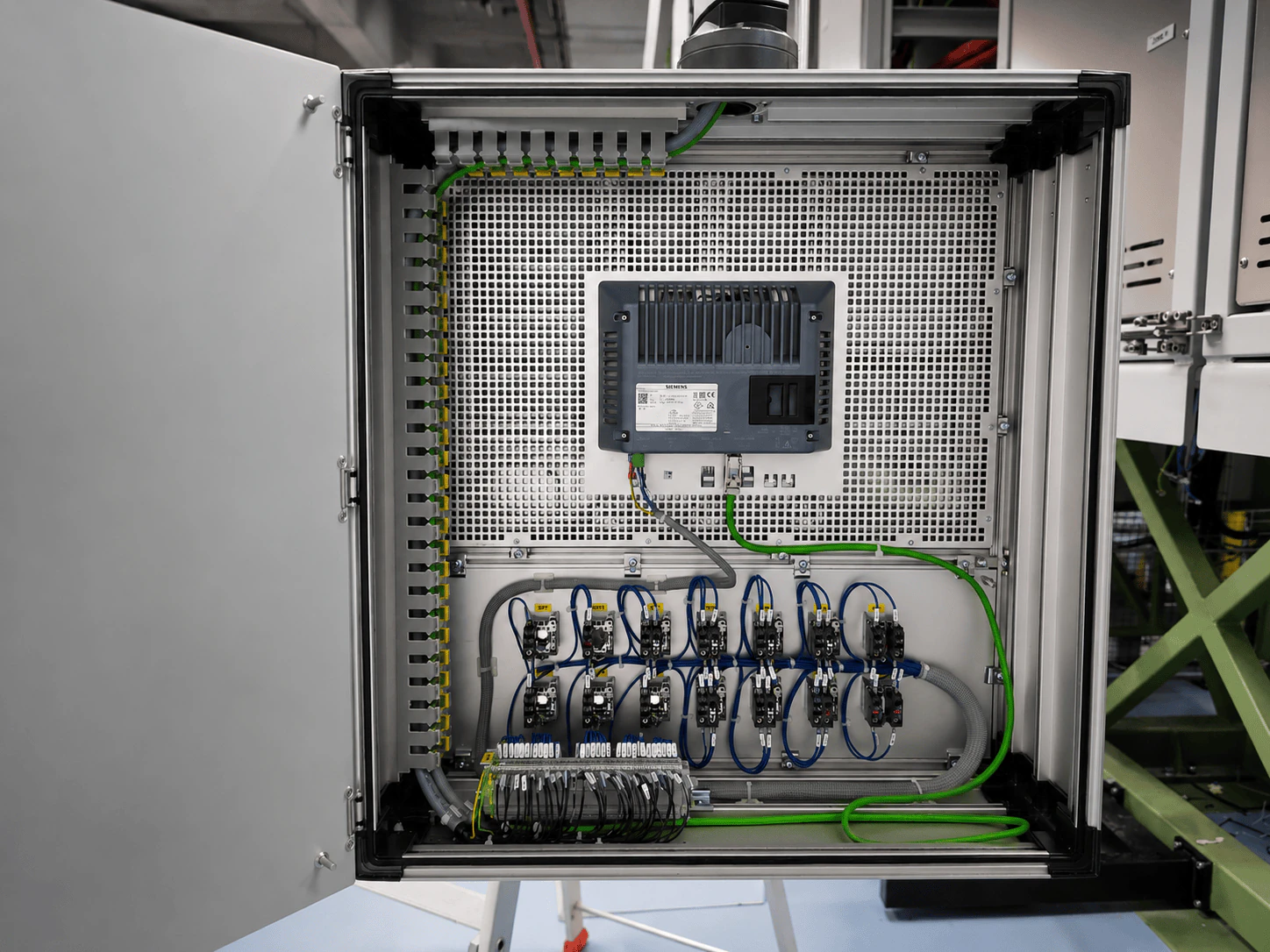
Wiring, functional checks, orderly components and panel traceability before release.

Signal tests, functional checks, commissioning and operational support in the field.
Have a similar plant?
We gather constraints, layout, signals and operational goals to work out whether you need PLC logic, control panels, HMI, revamping or field support.