Sequences that are hard to read
Automatic, manual, enables and interlocks must be structured for diagnosis and maintenance, not just to make the machine move.
PLC / HMI / SCADA software
We develop PLC logic, HMI interfaces and SCADA supervision to turn signals, sequences, alarms and recipes into information that is useful to production, operators and maintenance.
Where control is lost
Industrial software really works when the people running the plant understand what is happening, why it stopped and which piece of data they need to restart or correct the process.
Automatic, manual, enables and interlocks must be structured for diagnosis and maintenance, not just to make the machine move.
A message that flags an error but doesn't explain cause, point and action slows down every intervention.
Ungoverned parameters increase scrap, manual adjustments and reliance on a single operator's experience.
Designed for the people on the plant
Operator pages are designed together with the PLC logic: machine states, commands, alarms, recipes and diagnostics must speak the same technical language.

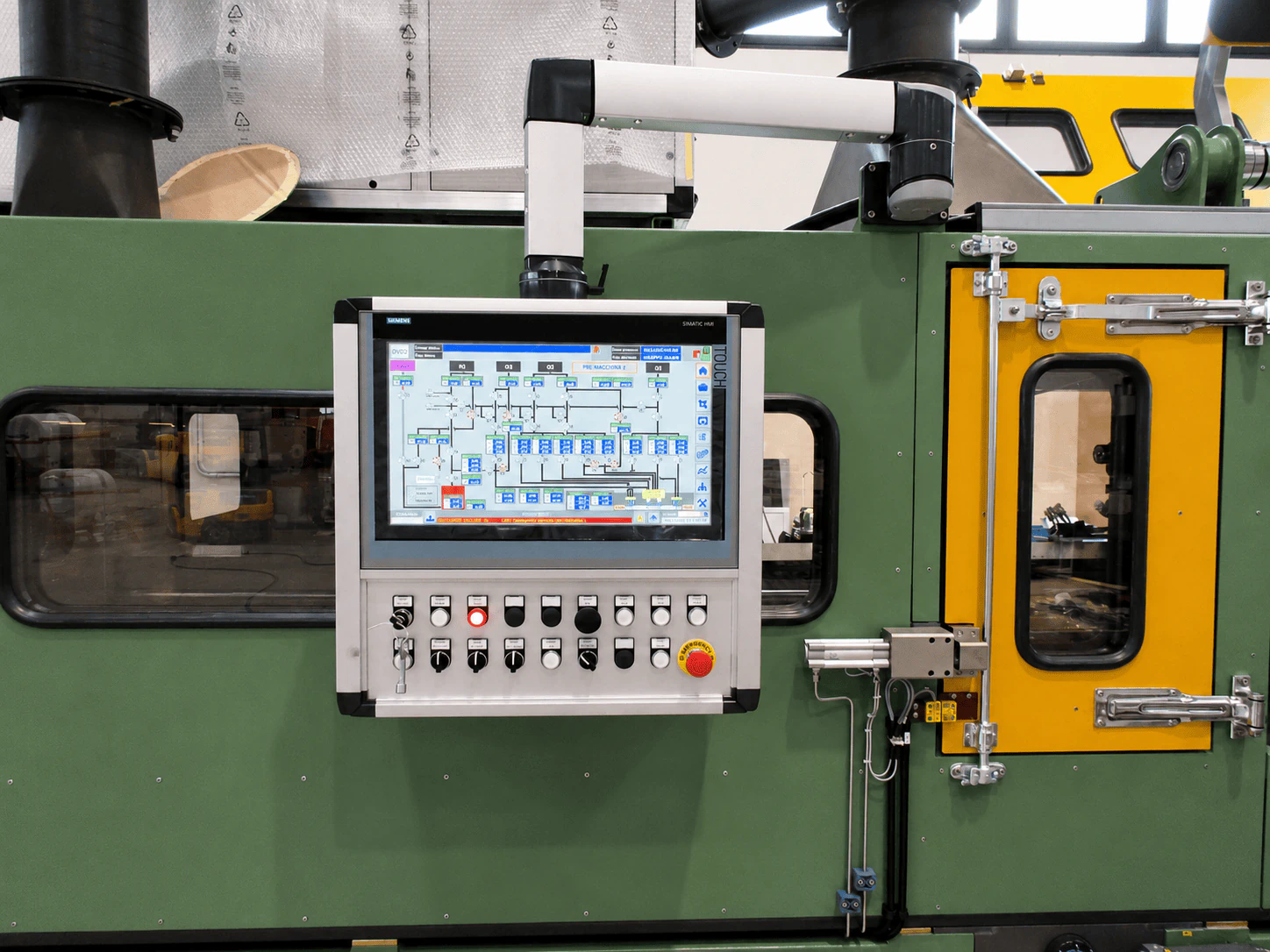
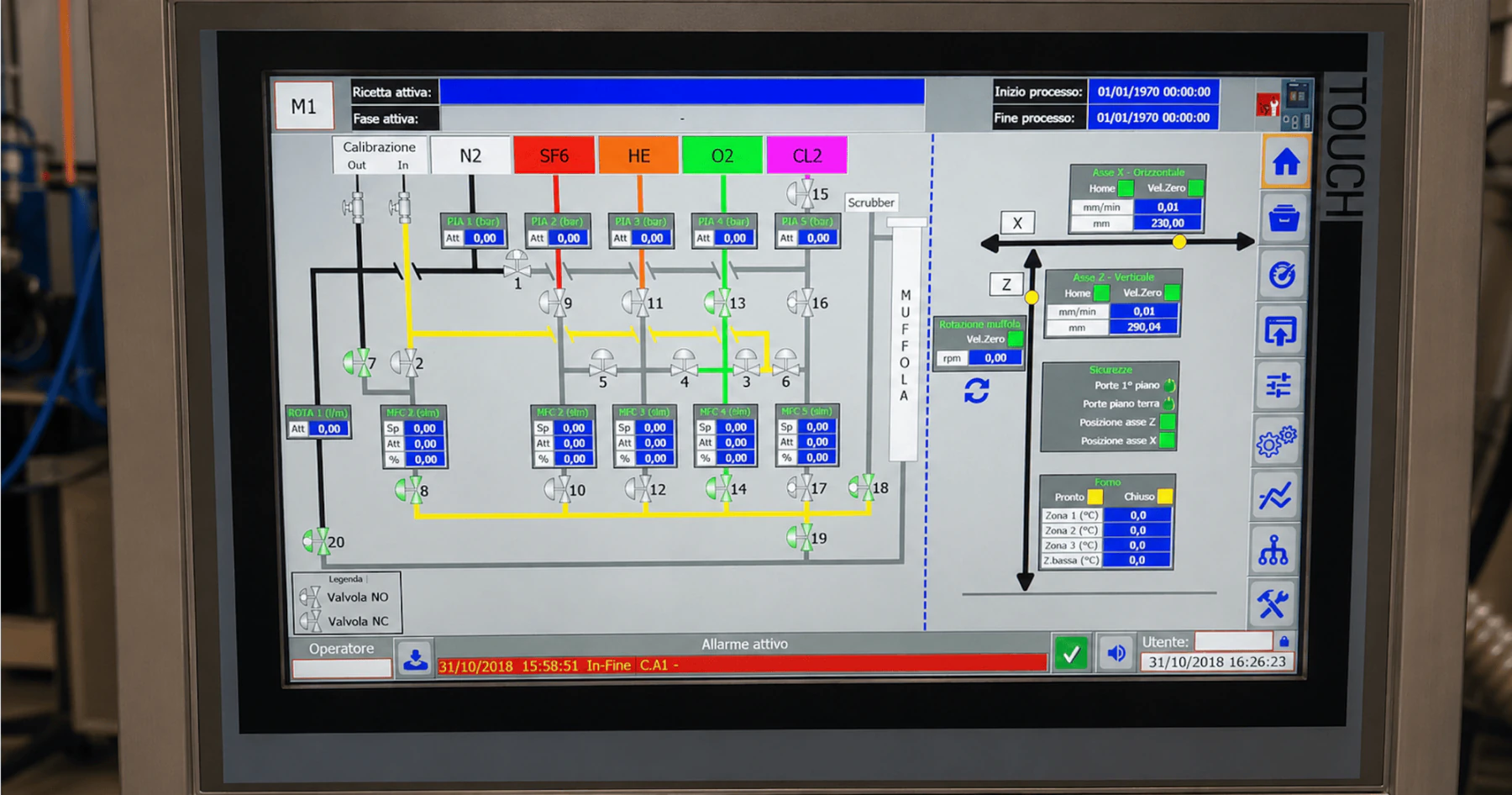
PLC / HMI / SCADA as one system
A controllable plant is born when PLC, interfaces, networks, drives, sensors and supervision are designed as one operational flow.
Digital and analog I/O, drives, sensors, remote I/O, safety and industrial networks.
Sequences, interlocks, machine states, recipe handling, commands and restart conditions.
Command pages, diagnostics, alarms, manuals, local trends and operator information.
Supervision, data collection, reports, trends and integration with existing systems when required.
OPERATOR EXPERIENCE
A good HMI screen has to guide the shift: machine status, alarms, enables, recipes, trends and diagnostics must be readable in seconds.
Commands, enables and operating modes readable without interpretation.
Messages linked to cause, area and the action to take.
Trends, counters and information to understand how the shift is going.
Less time spent looking for the problem, faster intervention.
From the PLC to the operator, every piece of information has to arrive at the right place, at the right time.
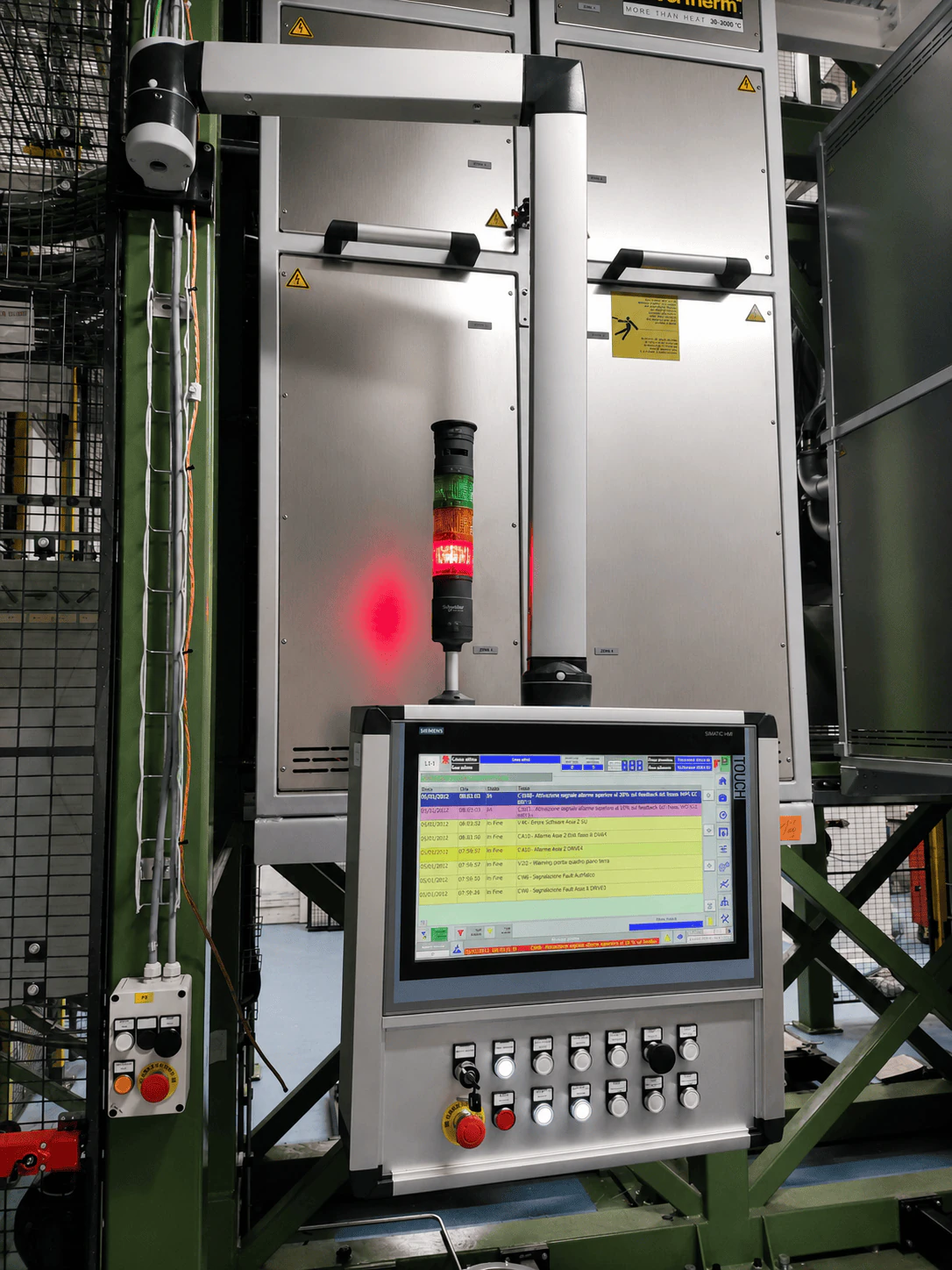
Diagnostics that reduce downtime
Diagnostics should not just flag that something is wrong. It has to help understand where to look, which enable is missing, which sequence is stopped and which conditions are needed to restart.
Concrete outputs
We don't just deliver code. The delivery has to be readable, saved, resumable and maintainable even after the initial work.
Automatic and manual sequences, interlocks, recipes, stop conditions and controlled restart.
Command pages, machine status, alarms, diagnostics, recipes and operator messages.
Supervision, trends, reports, data collection and integration with existing systems when required.
ProfiNet, ProfiBus, DeviceNet, PLC communication, drives, sensors and remote I/O.
Verification of logic, alarms, recipes, communications and machine states before operational handover.
Project backup, technical notes, versions and references useful for maintenance and future work.
Development method
The path starts from the expected behaviour of the plant, not from the screen or the single code block.
Machine states, operating modes, sequences, recipes, alarms and process constraints.
PLC, HMI, SCADA, networks and diagnostics are built with consistent references.
Software tests, backups, technical notes and open points to reduce reliance on unwritten knowledge.
Technical contact
Tell us about the machine, PLC, HMI, network, critical signals, recipes, alarms and what is unclear in production today. The first step is to work out which information needs to become visible.